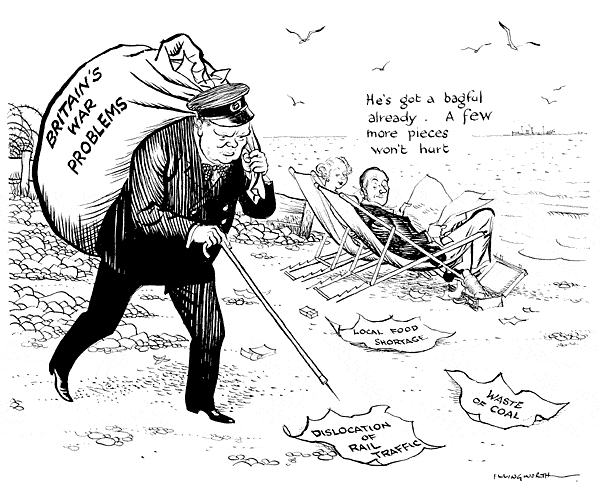
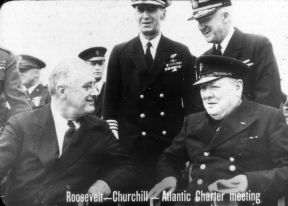
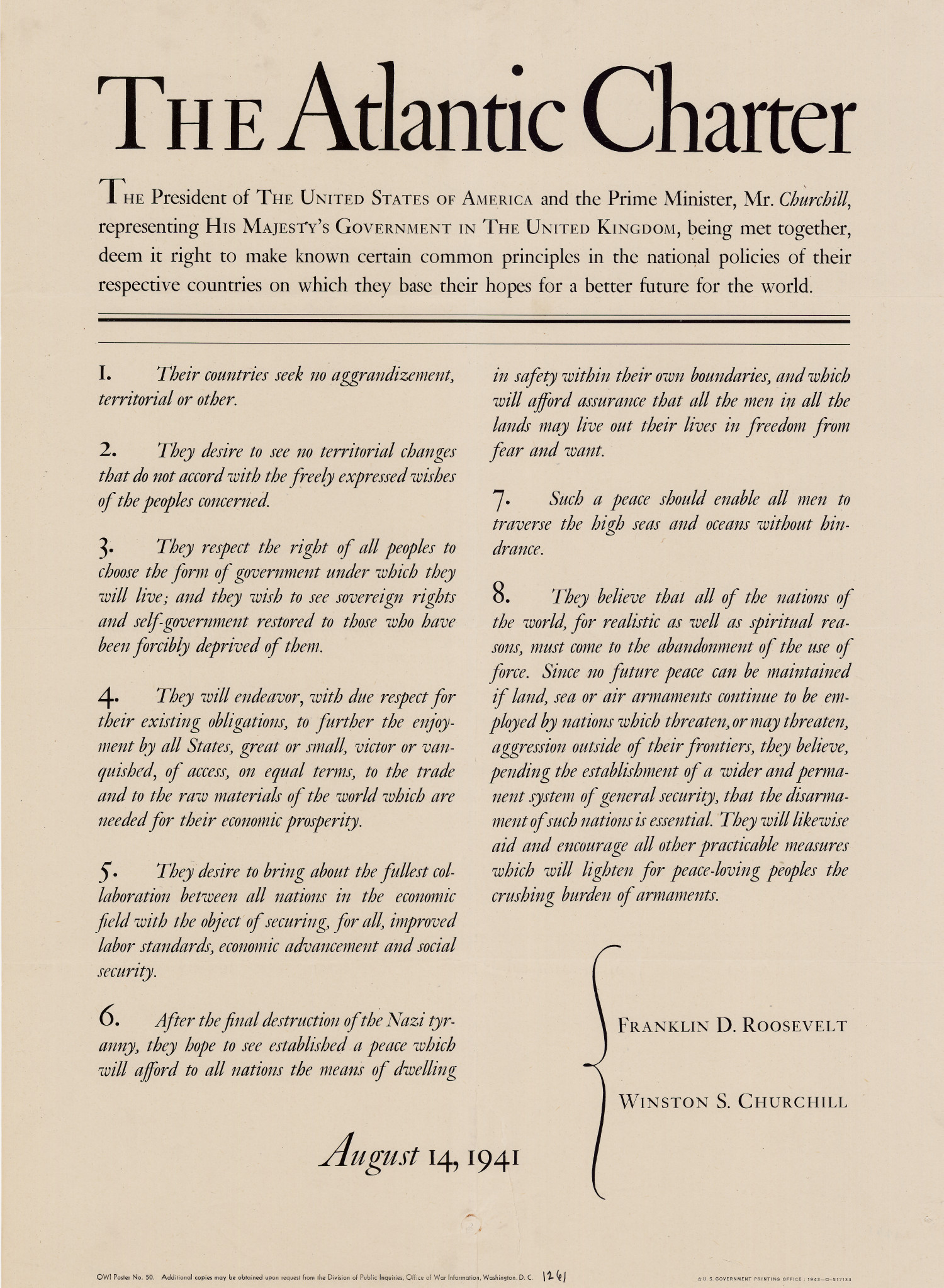
A tensão, que é observável entre as correspondências destes dois chefes de Estado, muitas vezes passou dos limites e ritos diplomáticos, chegando a situações quase que inimagináveis. De fato, esta troca de correspondência é uma das últimas chances em que chefes de Estado puderam se expressar, de certo modo, livremente e abertamente. Na Guerra Fria, por exemplo, muito se analisava se as cartas e comunicados, vindos pela hotline, eram de fato escritos pessoalmente pelo Premie russo, ou por uma junta do Partido.
Abaixo, transcrevo uma pérola dessas correspondências entre Churchill e Stalin (clique em Google Translate para traduzir o conteúdo das cartas).
Prime minister to Premier Stalin, November 4, 1941
In order to clear things up and to plan for the future I am ready to send General Wavell, Commande-in-Chief in India, Persia and Iraq, to meet you in Moscow, Kuibyshev, Tiflis or wherever you will. Besides this, General Paget, our new Commander-in-Chief, secretly desigated to the Far East, will come with General Wavell. General Paget has been on the centre of things here, and will have with him the latest and best opinions of our High Command. These two officers will be able to tell you exactly how we stand, what is possible and what we think is wise. They can reach you in about a fortnight. Do you want them?
2. We told you in my message of September 6 that we were wiling to declare war on Finland. Will you however consider whether it is really good business that Great Britain should declare war on Finland, Hungary, and Roumania at this moment?It is only a formality, because our extreme blockade is already in force against them. My judgment is against it, because first, Finland has many friends in the United States and is prudent to take account of this fact. Secondly, Roumania and Hungary: these countries are full of our friends; they have been overpowered by Hitler and used as a cat's-paw, but if fortune turns against that ruffian they might easily come back to our side. A British declaration of war would only freeze them all and make it look as if Hitler were the head of a grand European alliance solid against us. Do not, pray, suppose it is any want of zeal or comradeship that makes us doubt the advantage of this step. Our Dominions, except Australia, are reluctant. Nevertheless, if you think it will be a real help to you and worth while, I will put it to the Cabinet again.
3. I hope our supplies are being cleared from Archangel as far as they come in. A trickle is now beginning through Persia. We shall pump both ways to our utmost. Please make sure that our technicians who are going with the tanks and aircraft have full opportunity to hand these weapons over to you men under the best condition. At present our Mission at Kuibyshev is out of touch with all these affairs. They only want to help. These weapons are sent at our peril, and we are anxious they shall have the best chance. An order from you is necessary.
4. I cannot tell you about our immediate military plans, any more than you can tell me about yours, but rest assured we are not going to be idle.
5. With the object of keeping Japan quiet we are sending our latest battleship, Prince of Wales, which can catch and kill any Japanese ship, into the Indian Ocean, and are building up a powerful battle squadron there. I am urging President Roosevelt to increase his pressure on the Japanese and keep them frightened so that the Vladivostok route will not be blocked.
6. I will not waste words in compliments, because you know already from Beaverbrook and Harriman what we feel about your splendid fight. Have confidence in our untiring support.
7. I should be glad to hear from you direct that you have received this telegram.
Em 11 de novembro, Stalin responde:
M. Stalin to the Prime Minister, November 8, 1941.
Your message received on November 7.
I fully agree with you that clarity should be established in the relations between the U. S. S. R. and Great Britain. Such a clarity does not exist at present. The lack of clarity is consequence of two circunstances:
(a) There is no definite understanding between our two countries on war aims and on plans for the post-war organizations of peace.
(b) There is no agreement between the U. S. S. R. and Great Britain on mutual military assistance against Hitler in Europe.
As long as there is no accord on both these questions there can be no clarity in the Anglo-Soviet relations. More than that: to be frank, as long the present situation exists there will be difficulty in securing mutual confidence. Of course the agreement on military supplies to the U. S. S. R. has a great positive value, but is does not settle, neither does it exhaust, the whole problem of relations between out two countries. If the General Wavell and the General Paget whom you mention in your message will come to Moscow with a view to concluding agreement on the two fundamental questions referred to above, I naturally would be happy to meet them and to discuss with them these questions. If however the mission of the Generals is confined to the questions of information, and to the consideration of secondary matters,it would no be, I think, worth while to intrude upon the Generals. In such a case it would also be very difficult for me to find the time for the conversations.
2. It seems to me that an intolerable situation has been created in the question of the declaration of war by Great Britain on Finland, Hungary, and Roumania. The Soviet Government raised the question with the British Government through the secret diplomatic channels. Quite unexpected for the U. S. S. R.,the whole problem, beginning with the request of the Soviet Government to the British Government and ending with the consideration of this question by the U. S. A. Government, received wide publicity. The whole problem is now being discussed at random in the Press - friendly as well as enemy. And after all that the British Government informs us of its negative attitude to our proposal. Why is all this being done? To demonstrate the lak of unity between the U. S. S. R. and Great Britain?
You can rest assured that we are talking all the necessary measures for speedy transportation to the right place of all the arms coming from great Britain to Archangel. The same will be done with regard ti the route through Persia. In this connection may I call your attention to the fact (although this is a minor matter) that tanks, planes, and artillery are arriving inefficiently packed, that sometimes parts of he same vehicle area loaded in different ships, [and] that planes, because of the imperfect packing, reach us broken?