Mostrando postagens com marcador discurso. Mostrar todas as postagens

segunda-feira, 28 de novembro de 2011

Broken Arrow - O acidente de Palomares - Introdução

Um KC-135 reabastacendo um B-52D. Várias coisas podem dar errado...

17 de Janeiro de 1966: um bombardeiro B-52G, carregando quatro bombas de hidrogênio Mk48, colide com o avião tanque KC-135 a 31.000 pés de altitude, durante uma operação de reabastecimento no ar, sobre a Espanha.

Apesar do foco deste blog ser a Segunda Guerra Mundial, venho trazer a história do Acidente de Palomares, um dos pontos altos da Guerra Fria.

Introdução

Para compreendermos bem as implicações deste acidentes, precisamos antes nos remeter para o fim da Segunda Guerra Mundial, principalmente para dois eventos: o bombardeio de Tóquio e as bombas de Hiroshima e Nagasaki.

Durante a SGM, não havia nos Estados Unidos, a força aérea como um braço independente, havendo apenas o Exército e a Marinha compondo as Forças Armadas americanas. Desta forma, a aviação de guerra era vinculada principalmente ao Exército, através da USAAF - United States Army Air Force.

Com a detonação das bombas atômicas sobre o Japão, uma nova e revolucionária arma foi apresentada. Destruir uma cidade com uma bomba, ao invés de vários bombardeios e dezenas de raids, era - e ainda é - uma vantagem estratégica indescritível. E nos altos escalões militares americanos começou a discussão sobre qual Força deveria ter a posse desta nova arma de destruição absoluta.

Considerando a dimensão e peso das primeiras bombas, desenvolvidas com o Projeto Manhattan, em Los Alamos, a única forma prática de utilização dessas bombas era através de aeronáveis especialmente desenvolvidas para este fim, suportando o peso das bombas com condições táticas de detonação e retorno seguro.

Aliado a isto, a eficiência da USAAF foi claramente demonstrada com o  bombardeio de Tóquio em Abril de 1942. Apesar de pequeno no número de aeronaves, este bombardeio trouxe a capital inimiga às chamas, dado a eficiência da utilização de B-29 em voos de baixa altitude, carregando grandes quantidades de bombas incendiárias, alijadas sobre uma cidade feita de madeira.

As consequências deste bombardeio foi ajudar com encurtamento da Guerra (finalizada com as bombas atômicas), e o reconhecimento da eficiência da Força Aérea com força independente de guerra, não se limitando apenas ao suporte de operações de solo ou marinhas.

Com a nova arma podendo ser aplicada de forma tática somente por aviões, e a demostração prática da eficiência de uma Força Aérea, foi criada a terceira força americana: a USAF - United States Air Force, criada em 18 de setembro de 1948, tendo como homem forte Curtis LeMay, condutor do bombardeio de Tóquio.

Dentro da recém-criada USAF, o comando que mais ganhou força e destaque durante a Guerra Fria foi o SAC - Strategic Air Command, tornando-se o braço mais forte da USAF.

O SAC foi criado com a missão principal de prover a capacidade de bombardear alvos em qualquer parte do mundo (leia-se "União Soviética" e seus satélites). Apesar de seu importante objetivo, o SAC em seus primeiros dois anos existiu apenas no papel, devido ao movimento de desmobilização com o fim da SGM e a insatisfação do seu primeiro comandante, General George Kenney com o posto que lhe foi dado.
Emblema do SAC

Em 19 outubro de 1948, LeMay assumiu o comando do SAC (ocupando o posto até Junho de 1957), realizando profundas mudanças, tornando o SAC a força militar mais poderosa do mundo em pouco tempo.

Para cumprir a missão original do SAC, LeMay iniciou várias operações visando maximizar a abrangência e tempo de reação a qualquer ataque que os EUA pudessem sofrer. Dessas operações, uma das mais importantes é a Chrome Dome.

A Operação Chrome Dome consistiu em manter no ar, de forma constante, de bombardeios B-52 com bombas atômicas. Ou seja, mesmo que todas as bases americanas sofressem um ataque massivo, uma força significante sempre estaria no ar, em posição de ataque.

Abaixo temos os esquemas de voo:


Para manter essa força constante no ar, sobre os EUA e sobre países aliados na Europa, os B-52 faziam vários reabastecimentos no ar.

Em 17 de janeiro, um B-52 já havia atingido o ponto mais distante da missa, e estava retornando para a sua base em na Carolina do Norte - EUA. A sua missão previa um terceiro reabastecimento sobre o Mar Mediterrâneo, com um KC-135 vindo da base Moron AFB, próxima a Sevilha - Espanha.
Indícios apontam que, durante o reabastecimento, o B-52 não conseguiu parear a sua velocidade com a do avião tanque. Desta forma, o braço de reabastecimento colidiu com o bombardeio, causando a sua queda sobre a Espanha, próximo a uma vila de pescadores chamada Palomares.


O KC-135 explodiu no ar, matando toda a sua tripulação. 4 homens da tripulação do B-52 conseguiram usar seus para-quedas e sobreviveram.

Termino a introdução desta postagem com o discurso Sinews of Peace, proferido por Winston Churchill em 5 de março de 1946, no Westminster College, Fulton, Missouri.

Próxima postagem: Broken Arrow - O acidente de Palomares - A aeronave


President McCluer, ladies and gentlemen, and last, but certainly not least, the President of the United States of America:

I am very glad indeed to come to Westminster College this afternoon, and I am complimented that you should give me a degree from an institution whose reputation has been so solidly established. The name "Westminster" somehow or other seems familiar to me. I feel as if I have heard of it before. Indeed now that I come to think of it, it was at Westminster that I received a very large part of my education in politics, dialectic, rhetoric, and one or two other things. In fact we have both been educated at the same, or similar, or, at any rate, kindred establishments.

It is also an honor, ladies and gentlemen, perhaps almost unique, for a private visitor to be introduced to an academic audience by the President of the United States. Amid his heavy burdens, duties, and responsibilities--unsought but not recoiled from--the President has traveled a thousand miles to dignify and magnify our meeting here to-day and to give me an opportunity of addressing this kindred nation, as well as my own countrymen across the ocean, and perhaps some other countries too. The President has told you that it is his wish, as I am sure it is yours, that I should have full liberty to give my true and faithful counsel in these anxious and baffling times. I shall certainly avail myself of this freedom, and feel the more right to do so because any private ambitions I may have cherished in my younger days have been satisfied beyond my wildest dreams. Let me however make it clear that I have no official mission or status of any kind, and that I speak only for myself. There is nothing here but what you see.

I can therefore allow my mind, with the experience of a lifetime, to play over the problems which beset us on the morrow of our absolute victory in arms, and to try to make sure with what strength I have that what has gained with so much sacrifice and suffering shall be preserved for the future glory and safety of mankind.

Ladies and gentlemen, the United States stands at this time at the pinnacle of world power. It is a solemn moment for the American Democracy. For with primacy in power is also joined an awe-inspiring accountability to the future. If you look around you, you must feel not only the sense of duty done but also you must feel anxiety lest you fall below the level of achievement. Opportunity is here and now, clear and shining for both our countries. To reject it or ignore it or fritter it away will bring upon us all the long reproaches of the after-time. It is necessary that the constancy of mind, persistency of purpose, and the grand simplicity of decision shall rule and guide the conduct of the English-speaking peoples in peace as they did in war. We must, and I believe we shall, prove ourselves equal to this severe requirement.

President McCluer, when American military men approach some serious situation they are wont to write at the head of their directive the words "over-all strategic concept". There is wisdom in this, as it leads to clarity of thought. What then is the over-all strategic concept which we should inscribe to-day? It is nothing less than the safety and welfare, the freedom and progress, of all the homes and families of all the men and women in all the lands. And here I speak particularly of the myriad cottage or apartment homes where the wage-earner strives amid the accidents and difficulties of life to guard his wife and children from privation and bring the family up the fear of the Lord, or upon ethical conceptions which often play their potent part.

To give security to these countless homes, they must be shielded form two gaunt marauders, war and tyranny. We al know the frightful disturbance in which the ordinary family is plunged when the curse of war swoops down upon the bread-winner and those for whom he works and contrives. The awful ruin of Europe, with all its vanished glories, and of large parts of Asia glares us in the eyes. When the designs of wicked men or the aggressive urge of mighty States dissolve over large areas the frame of civilized society, humble folk are confronted with difficulties with which they cannot cope. For them is all distorted, all is broken, all is even ground to pulp.

When I stand here this quiet afternoon I shudder to visualize what is actually happening to millions now and what is going to happen in this period when famine stalks the earth. None can compute what has been called "the unestimated sum of human pain". Our supreme task and duty is to guard the homes of the common people from the horrors and miseries of another war. We are all agreed on that.

Our American military colleagues, after having proclaimed their "over-all strategic concept" and computed available resources, always proceed to the next step -- namely, the method. Here again there is widespread agreement. A world organization has already been erected for the prime purpose of preventing war. UNO, the successor of the League of Nations, with the decisive addition of the United States and all that that means, is already at work. We must make sure that its work is fruitful, that it is a reality and not a sham, that it is a force for action, and not merely a frothing of words, that it is a true temple of peace in which the shields of many nations can some day be hung up, and not merely a cockpit in a Tower of Babel. Before we cast away the solid assurances of national armaments for self-preservation we must be certain that our temple is built, not upon shifting sands or quagmires, but upon a rock. Anyone can see with his eyes open that our path will be difficult and also long, but if we persevere together as we did in the two world wars -- though not, alas, in the interval between them -- I cannot doubt that we shall achieve our common purpose in the end.

I have, however, a definite and practical proposal to make for action. Courts and magistrates may be set up but they cannot function without sheriffs and constables. The United Nations Organization must immediately begin to be equipped with an international armed force. In such a matter we can only go step by step, but we must begin now. I propose that each of the Powers and States should be invited to dedicate a certain number of air squadrons to the service of the world organization. These squadrons would be trained and prepared in their own countries, but would move around in rotation from one country to another. They would wear the uniforms of their own countries but with different badges. They would not be required to act against their own nation, but in other respects they would be directed by the world organization. This might be started on a modest scale and it would grow as confidence grew. I wished to see this done after the first world war, and I devoutly trust that it may be done forthwith.

It would nevertheless, ladies and gentlemen, be wrong and imprudent to entrust the secret knowledge or experience of the atomic bomb, which the United States, great Britain, and Canada now share, to the world organization, while still in its infancy. It would be criminal madness to cast it adrift in this still agitated and un-united world. No one country has slept less well in their beds because this knowledge and the method and the raw materials to apply it, are present largely retained in American hands. I do not believe we should all have slept so soundly had the positions been reversed and some Communist or neo-Facist State monopolized for the time being these dread agencies. The fear of them alone might easily have been used to enforce totalitarian systems upon the free democratic world, with consequences appalling to human imagination. God has willed that this shall not be and we have at least a breathing space to set our world house in order before this peril has to be encountered: and even then, if no effort is spared, we should still possess so formidable a superiority as to impose effective deterrents upon its employment, or threat of employment, by others. Ultimately, when the essential brotherhood of man is truly embodied and expressed in a world organization with all the necessary practical safeguards to make it effective, these powers would naturally be confided to that world organizations.

Now I come to the second of the two marauders, to the second danger which threatens the cottage homes, and the ordinary people -- namely, tyranny. We cannot be blind to the fact that the liberties enjoyed by individual citizens throughout the United States and throughout the British Empire are not valid in a considerable number of countries, some of which are very powerful. In these States control is enforced upon the common people by various kinds of all-embracing police governments to a degree which is overwhelming and contrary to every principle of democracy. The power of the State is exercised without restraint, either by dictators or by compact oligarchies operating through a privileged party and a political police. It is not our duty at this time when difficulties are so numerous to interfere forcibly in the internal affairs of countries which we have not conquered in war. but we must never cease to proclaim in fearless tones the great principles of freedom and the rights of man which are the joint inheritance of the English-speaking world and which through Magna Carta, the Bill of rights, the Habeas Corpus, trial by jury, and the English common law find their most famous expression in the American Declaration of Independence.

All this means that the people of any country have the right, and should have the power by constitutional action, by free unfettered elections, with secret ballot, to choose or change the character or form of government under which they dwell; that freedom of speech and thought should reign; that courts of justice, independent of the executive, unbiased by any party, should administer laws which have received the broad assent of large majorities or are consecrated by time and custom. Here are the title deeds of freedom which should lie in every cottage home. Here is the message of the British and American peoples to mankind. Let us preach what we practice -- let us practice what we preach.

though I have now stated the two great dangers which menace the home of the people, War and Tyranny, I have not yet spoken of poverty and privation which are in many cases the prevailing anxiety. But if the dangers of war and tyranny are removed, there is no doubt that science and cooperation can bring in the next few years, certainly in the next few decades, to the world, newly taught in the sharpening school of war, an expansion of material well-being beyond anything that has yet occurred in human experience.

Now, at this sad and breathless moment, we are plunged in the hunger and distress which are the aftermath of our stupendous struggle; but this will pass and may pass quickly, and there is no reason except human folly or sub-human crime which should deny to all the nations the inauguration and enjoyment of an age of plenty. I have often used words which I learn fifty years ago from a great Irish-American orator, a friend of mine, Mr. Bourke Cockran, "There is enough for all. The earth is a generous mother; she will provide in plentiful abundance food for all her children if they will but cultivate her soil in justice and peace." So far I feel that we are in full agreement.

Now, while still pursing the method -- the method of realizing our over-all strategic concept, I come to the crux of what I have traveled here to say. Neither the sure prevention of war, nor the continuous rise of world organization will be gained without what I have called the fraternal association of the English-speaking peoples. This means a special relationship between the British Commonwealth and Empire and the United States of America. Ladies and gentlemen, this is no time for generality, and I will venture to the precise. Fraternal association requires not only the growing friendship and mutual understanding between our two vast but kindred systems of society, but the continuance of the intimate relations between our military advisers, leading to common study of potential dangers, the similarity of weapons and manuals of instructions, and to the interchange of officers and cadets at technical colleges. It should carry with it the continuance of the present facilities for mutual security by the joint use of all Naval and Air Force bases in the possession of either country all over the world. This would perhaps double the mobility of the American Navy and Air Force. It would greatly expand that of the British Empire forces and it might well lead, if and as the world calms down, to important financial savings. Already we use together a large number of islands; more may well be entrusted to our joint care in the near future.

the United States has already a Permanent Defense Agreement with the Dominion of Canada, which is so devotedly attached to the British Commonwealth and the Empire. This Agreement is more effective than many of those which have been made under formal alliances. This principle should be extended to all the British Commonwealths with full reciprocity. Thus, whatever happens, and thus only, shall we be secure ourselves and able to works together for the high and simple causes that are dear to us and bode no ill to any. Eventually there may come -- I feel eventually there will come -- the principle of common citizenship, but that we may be content to leave to destiny, whose outstretched arm many of us can already clearly see.

There is however an important question we must ask ourselves. Would a special relationship between the United States and the British Commonwealth be inconsistent with our over-riding loyalties to the World Organization? I reply that, on the contrary, it is probably the only means by which that organization will achieve its full stature and strength. There are already the special United States relations with Canada that I have just mentioned, and there are the relations between the United States and the South American Republics. We British have also our twenty years Treaty of Collaboration and Mutual Assistance with Soviet Russia. I agree with Mr. Bevin, the Foreign Secretary of Great Britain, that it might well be a fifty years treaty so far as we are concerned. We aim at nothing but mutual assistance and collaboration with Russia. The British have an alliance with Portugal unbroken since the year 1384, and which produced fruitful results at a critical moment in the recent war. None of these clash with the general interest of a world agreement, or a world organization; on the contrary, they help it. "In my father's house are many mansions." Special associations between members of the United Nations which have no aggressive point against any other country, which harbor no design incompatible with the Charter of the United Nations, far from being harmful, are beneficial and, as I believe, indispensable.

I spoke earlier, ladies and gentlemen, of the Temple of Peace. Workmen from all countries must build that temple. If two of the workmen know each other particularly well and are old friends, if their families are intermingled, if they have "faith in each other's purpose, hope in each other's future and charity towards each other's shortcomings" -- to quote some good words I read here the other day -- why cannot they work together at the common task as friends and partners? Why can they not share their tools and thus increase each other's working powers? Indeed they must do so or else the temple may not be built, or, being built, it may collapse, and we should all be proved again unteachable and have to go and try to learn again for a third time in a school of war incomparably more rigorous than that from which we have just been released. The dark ages may return, the Stone Age may return on the gleaming wings of science, and what might now shower immeasurable material blessings upon mankind, may even bring about its total destruction. Beware, I say; time may be short. Do not let us take the course of allowing events to drift along until it is too late. If there is to be a fraternal association of the kind of I have described, with all the strength and security which both our countries can derive from it, let us make sure that that great fact is known to the world, and that it plays its part in steadying and stabilizing the foundations of peace. There is the path of wisdom. Prevention is better than the cure.

A shadow has fallen upon the scenes so lately light by the Allied victory. Nobody knows what Soviet Russia and its Communist international organization intends to do in the immediate future, or what are the limits, if any, to their expansive and proselytizing tendencies. I have a strong admiration and regard for the valiant Russian people and for my wartime comrade, Marshall Stalin. There is deep sympathy and goodwill in Britain -- and I doubt not here also -- towards the peoples of all the Russias and a resolve to persevere through many differences and rebuffs in establishing lasting friendships. We understand the Russian need to be secure on her western frontiers by the removal of all possibility of German aggression. We welcome Russia to her rightful place among the leading nations of the world. We welcome her flag upon the seas. Above all, we welcome, or should welcome, constant, frequent and growing contacts between the Russian people and our own people on both sides of the Atlantic. It is my duty however, for I am sure you would wish me to state the facts as I see them to you. It is my duty to place before you certain facts about the present position in Europe.

From Stettin in the Baltic to Trieste in the Adriatic an iron curtain has descended across the Continent. Behind that line lie all the capitals of the ancient states of Central and Eastern Europe. Warsaw, Berlin, Prague, Vienna, Budapest, Belgrade, Bucharest and Sofia, all these famous cities and the populations around them lie in what I must call the Soviet sphere, and all are subject in one form or another, not only to Soviet influence but to a very high and, in some cases, increasing measure of control from Moscow. Athens alone -- Greece with its immortal glories -- is free to decide its future at an election under British, American and French observation. The Russian-dominated Polish Government has been encouraged to make enormous and wrongful inroads upon Germany, and mass expulsions of millions of Germans on a scale grievous and undreamed-of are now taking place. The Communist parties, which were very small in all these Eastern States of Europe, have been raised to pre-eminence and power far beyond their numbers and are seeking everywhere to obtain totalitarian control. Police governments are prevailing in nearly every case, and so far, except in Czechoslovakia, there is no true democracy.

Turkey and Persia are both profoundly alarmed and disturbed at the claims which are being made upon them and at the pressure being exerted by the Moscow Government. An attempt is being made by the Russians in Berlin to build up a quasi-Communist party in their zone of occupied Germany by showing special favors to groups of left-wing German leaders. At the end of the fighting last June, the American and British Armies withdrew westward, in accordance with an earlier agreement, to a depth at some points of 150 miles upon a front of nearly four hundred miles, in order to allow our Russian allies to occupy this vast expanse of territory which the Western Democracies had conquered.

If no the Soviet Government tries, by separate action , to build up a pro-Communist Germany in their areas, this will cause new serious difficulties in the American and British zones, and will give the defeated Germans the power of putting themselves up to auction between the Soviets and the Western Democracies. Whatever conclusions may be drawn from these facts -- and facts they are -- this is certainly not the Liberated Europe we fought to build up. Nor is it one which contains the essentials of permanent peace.

The safety of the world, ladies and gentlemen, requires a new unity in Europe, from which no nation should be permanently outcast. It is from the quarrels of the strong parent races in Europe that the world wars we have witnessed, or which occurred in former times, have sprung. Twice in our own lifetime we have seen the United States, against their wished and their traditions, against arguments, the force of which it is impossible not to comprehend, twice we have seen them drawn by irresistible forces, into these wars in time to secure the victory of the good cause, but only after frightful slaughter and devastation have occurred. Twice the United State has had to send several millions of its young men across the Atlantic to find the war; but now war can find any nation, wherever it may dwell between dusk and dawn. Surely we should work with conscious purpose for a grand pacification of Europe, within the structure of the United Nations and in accordance with our Charter. That I feel opens a course of policy of very great importance.

In front of the iron curtain which lies across Europe are other causes for anxiety. In Italy the Communist Party is seriously hampered by having to support the Communist-trained Marshal Tito's claims to former Italian territory at the head of the Adriatic. Nevertheless the future of Italy hangs in the balance. Again one cannot imagine a regenerated Europe without a strong France. All my public life I never last faith in her destiny, even in the darkest hours. I will not lose faith now. However, in a great number of countries, far from the Russian frontiers and throughout the world, Communist fifth columns are established and work in complete unity and absolute obedience to the directions they receive from the Communist center. Except in the British Commonwealth and in the United States where Communism is in its infancy, the Communist parties or fifth columns constitute a growing challenge and peril to Christian civilization. These are somber facts for anyone to have recite on the morrow a victory gained by so much splendid comradeship in arms and in the cause of freedom and democracy; but we should be most unwise not to face them squarely while time remains.

The outlook is also anxious in the Far East and especially in Manchuria. The Agreement which was made at Yalta, to which I was a party, was extremely favorable to Soviet Russia, but it was made at a time when no one could say that the German war might no extend all through the summer and autumn of 1945 and when the Japanese war was expected by the best judges to last for a further 18 months from the end of the German war. In this country you all so well-informed about the Far East, and such devoted friends of China, that I do not need to expatiate on the situation there.

I have, however, felt bound to portray the shadow which, alike in the west and in the east, falls upon the world. I was a minister at the time of the Versailles treaty and a close friend of Mr. Lloyd-George, who was the head of the British delegation at Versailles. I did not myself agree with many things that were done, but I have a very strong impression in my mind of that situation, and I find it painful to contrast it with that which prevails now. In those days there were high hopes and unbounded confidence that the wars were over and that the League of Nations would become all-powerful. I do not see or feel that same confidence or event he same hopes in the haggard world at the present time.

On the other hand, ladies and gentlemen, I repulse the idea that a new war is inevitable; still more that it is imminent. It is because I am sure that our fortunes are still in our own hands and that we hold the power to save the future, that I feel the duty to speak out now that I have the occasion and the opportunity to do so. I do not believe that Soviet Russia desires war. What they desire is the fruits of war and the indefinite expansion of their power and doctrines. But what we have to consider here today while time remains, is the permanent prevention of war and the establishment of conditions of freedom and democracy as rapidly as possible in all countries. Our difficulties and dangers will not be removed by closing our eyes to them. They will not be removed by mere waiting to see what happens; nor will they be removed by a policy of appeasement. What is needed is a settlement, and the longer this is delayed, the more difficult it will be and the greater our dangers will become.

From what I have seen of our Russian friends and Allies during the war, I am convinced that there is nothing for which they have less respect than for weakness, especially military weakness. For that reason the old doctrine of a balance of power is unsound. We cannot afford, if we can help it, to work on narrow margins, offering temptations to a trial of strength. If the Western Democracies stand together in strict adherence to the principles will be immense and no one is likely to molest them. If however they become divided of falter in their duty and if these all-important years are allowed to slip away then indeed catastrophe may overwhelm us all.

Last time I saw it all coming and I cried aloud to my own fellow-countrymen and to the world, but no one paid any attention. Up till the year 1933 or even 1935, Germany might have been saved from the awful fate which has overtaken here and we might all have been spared the miseries Hitler let loose upon mankind. there never was a war in history easier to prevent by timely action than the one which has just desolated such great areas of the globe. It could have been prevented in my belief without the firing of a single shot, and Germany might be powerful, prosperous and honored today; but no one would listen and one by one we were all sucked into the awful whirlpool. We surely, ladies and gentlemen, I put it to you, surely, we must not let it happen again. This can only be achieved by reaching now, in 1946, by reaching a good understanding on all points with Russia under the general authority of the United Nations Organization and by the maintenance of that good understanding through many peaceful years, by the whole strength of the English-speaking world and all its connections. There is the solution which I respectfully offer to you in this Address to which I have given the title, "The Sinews of Peace".

Let no man underrate the abiding power of the British Empire and Commonwealth. Because you see the 46 millions in our island harassed about their food supply, of which they only grow one half, even in war-time, or because we have difficulty in restarting our industries and export trade after six years of passionate war effort, do not suppose we shall not come through these dark years of privation as we have come through the glorious years of agony. Do not suppose that half a century from now you will not see 70 or 80 millions of Britons spread about the world united in defense of our traditions, and our way of life, and of the world causes which you and we espouse. If the population of the English-speaking Commonwealths be added to that of the United States with all that such co-operation implies in the air, on the sea, all over the globe and in science and in industry, and in moral force, there will be no quivering, precarious balance of power to offer its temptation to ambition or adventure. On the contrary there will be an overwhelming assurance of security. If we adhere faithfully to the Charter of the United Nations and walk forward in sedate and sober strength seeking no one's land or treasure, seeking to lay no arbitrary control upon the thoughts of men; if all British moral and material forces and convictions are joined with your own in fraternal association, the highroads of the future will be clear, not only for our time, but for a century to come.

sábado, 29 de outubro de 2011

Uma guerra educada

O tipo de humor de Winston Churchill é um dos meus preferidos, e sempre procuro fazer menção à trechos onde ele o exercita neste blog.

Um exemplo de sua acidez impecável ocorre quando ele transcreve a Declaração de Guerra da Grã-Bretanha ao Japão.

Foreign Office, December 8th

Sir,

On the evening of December 7th his Majesty's Góvernment in the United Kingdom learned that Japanese forces without previous warning either in the form of a declaration of war or of an ultimatum with a conditional declaration of war had attempted a landing on the coast of Malaya and bombed Singapore and Hong Kong

In view of these wanton acts of unprovoked aggression committed in flagrant violation on International Law and particularly of Article I of the Third Hague Convention relative to the opening of hostilities, to which both Japan and the United Kingdom are parties, His Majesty's Ambassor at Tokyo has been instructed to inform the Imperial Japanese Government that a state of war exists between out two contries.

I have the honour to be, with your high consideration,

Sir,
Your obedient servant,
WINSTON CHURCHILL
Após transcrever a declaração, Churchill pondera:

Some people did not like this ceremonial style. But after all when you have to kill a man it costs nothing to be polite.
Abaixo o audio e texto da transmissão de rádio sobre a declaração de guerra.


As soon as I heard last night that Japan had attacked the United States, my first feeling was that Parliament should be immediately summoned. We are fighting for the maintenance of a parliamentary system, and it is indispensable to our system of Government that Parliament should play its full part in all the important acts of the state and on all the great occasions in the conduct of the war. The great number of members who attended in spite of the shortness of the notice shows the zeal and strictness with which the members of both Houses attend to their duties.

You will remember that a month ago, with the full approval of the nation and of the Empire, I pledged the word of Great Britain that should the United States become involved in a war with Japan, a British declaration would follow within the hour. I therefore spoke to President Roosevelt on the Atlantic telephone last night with a view to arranging the timing of our respective declarations. The President told me that he would this morning send a message to Congress, which of course as you all know is the instrument, the constitutional instrument, by which alone a United States declaration of war can be made.

And I assured him that we would follow immediately. However, it soon appeared that British territory in Malaya had also been the object of a Japanese attack, and later on it was announced from Tokyo that the Japanese High Command-not the Imperial Japanese Government-but the Japanese High Command had declared that a state of war existed with Great Britain and the United States.

There has been for a long time in Japan a number of military societies-secret societies-which have asserted their view of what the policy of Japan should be by murdering the Ministers whom they thought were not sufficiently "jingo" for their tastes. And it is to these bodies that the most strange and violent action of Japan's, so fateful for her future, must be ascribed.

In view of the attack, and of this declaration, there was no need to wait for the declaration by Congress, and in any case there was the complication that American time is nearly six hours behind ours. The Cabinet, therefore, which met at half-past-twelve today, have authorized an immediate declaration of war upon Japan. Instructions to this effect were sent to our Ambassador in Tokyo, and the Japanese chargé d'affaires in London and his staff have been given their passports.

Meanwhile, hostilities have already begun. The Japanese began a landing in British territory in Northern Malaya at about 6 o'clock-that's 1 a.m. local time yesterday-and they were immediately engaged by our troops who were there waiting for them.

The Home Office measures against Japanese nationals were set in motion a little after 10 last night. You will see, therefore, that no time has been lost, and you will see also that we are actually ahead of our engagements.

The Dutch Government in the East Indies-the Royal Netherlands Government-who preside over the important Oriental possessions of Holland, at once marked their solidarity with Great Britain and the United States. At 3 in the morning the Netherlands Minister informed our Foreign Office that his Government were telling the Japanese Government that in view of the hostile acts perpetrated by Japanese forces against two powers with whom the Netherlands maintain particularly close relations, they consider that, as a consequence, a state of war now exists between the Kingdom of the Netherlands and Japan.

I don't know yet what part Siam will be called upon to play in this fresh war, but we have reports that Japanese troops have landed at Singora near the Kra Isthmus, which is in Siamese territory on the frontier of Malaya, very close to where the landing was made in our own territory. Just before Japan went to war-on the day before-I had sent the Siamese Prime Minister, or Thailand Prime Minister, the following message: "There is a possibility of imminent Japanese invasion of your country. If you are attacked, defend yourselves. The preservation of the true independence and sovereignty of Thailand is a British interest, and we shall regard an attack on you as an attack upon ourselves."

This afternoon we have had the speech of the President of the United States, addressed to the Congress under the most formal and solemn circumstances, and calling for an immediate recognition of a state of war.

It is worth while looking for a moment at the manner in which the Japanese have begun their assault upon the English-speaking world, and particularly upon the United States. Every circumstance of calculated and characteristic Japanese treachery was employed. The Japanese envoys, Nomura and Kurusu, there in Washington, were ordered to prolong their mission in the United States in order to keep conversations going while the surprise attack was being prepared-an attack which was to be delivered before any declaration of war. The President, you will remember, on Sunday had made an appeal to the Emperor of Japan, reminding him of the ancient friendship between the United States and Japan, by which Japan has greatly benefited, and impressing upon him the importance of preserving the peace in the Pacific. The attack upon the United States ships in Pearl Harbor, thousands of miles away from Japan, was the base and brutal reply.

No one can doubt that every effort to bring about a peaceful solution was made by the Government of the United States. We have all seen the immense patience and composure which they have shown in the face of the growing Japanese menace. But now all that is over. And now that the issue is joined in a most direct manner, it only remains for the two great Democracies to face their task with whatever strength God may give them.

We must hold ourselves very fortunate, and I think we may say that our affairs have not been ill-guided, when we reflect that in all our period of weakness after Dunkirk we were not attacked alone-while we were alone-by Japan-or indeed at any time in 1940, before the United States had fully realised the dangers which threatened the whole world. In all that period we were in very great danger of having an attack made upon us in the Far East to which we could not have made any adequate resistance. But so precarious and narrow was the margin upon which we then lived, that we did not dare express the sympathy which we have all along felt for the heroic people of China. We were even forced for a short time in the Summer of 1940 to agree to the closing of the Burma Road by which they get their supplies. We had to bow for the time to the force of the hurricane. But later, as time passed, at the beginning of this year-as soon as we had regathered our strength after the Battle of Britain had been won-we reversed that policy, and the House will remember that both I and the Foreign Secretary have felt able to make increasingly outspoken declarations of friendship.

When I said this in the House this afternoon, there was general assent that we have moved steadily forward, as our strength has grown, in our declarations of friendship to the Chinese people and their great leader, General Chiang Kai-shek.

We have always been friends with the Chinese since the beginning of this vile outrage upon them more than four years ago, and last night I cabled to Generalissimo Chiang Kai-shek, assuring him that henceforward we would face the common foe together.

Although the imperative demands of the war in Europe and in Africa have strained our resources, vast and growing though they be, you and all the Empire will notice that some of the finest ships in the Royal Navy have reached their stations in the Far East at a very convenient moment. Every preparation in our power has been made, every preparation which our resources allowed-and you must not forget the many calls upon us-has been made. And I do not doubt that wherever we are attacked we shall give a good account of ourselves.

The closest accord has been established with the powerful American naval and air forces, as also with the strong, efficient forces belonging to the Royal Netherlands Government in the Netherlands East Indies. All this has been arranged. We have our great preoccupations here in Europe, but at the same time everything that our resources, everything that forethought can do, has been done to prepare for this long threatened storm in the Far East which has now broken upon us and on our friends across the Atlantic Ocean.

When we think of the insane ambition and insatiable appetite, which have caused this vast, melancholy extension of the war, we can only feel that Hitler's madness has infected the Japanese minds and that the root of the evil and its branch must be extirpated together.

My friends, let me say this. It is of the highest importance that there should be no underrating of the gravity of the new dangers we have to meet, either here in this Island, or those dangers which the United States have to meet. The enemy has attacked with an audacity which may spring from recklessness, but which may also spring from a conviction of strength.

One thing is certain: The need for greater effort in munitions production. That must impress itself upon every mind tonight. It is quite certain that some of the supplies on which we had counted, which had been diverted to Russia, will have to be made good by us. It may well be that in the next few months we shall have a gap to fill. It is particularly necessary that all munition workers, all those who are engaged in war industries, should make a further effort proportionate to the magnitude of the perils and to the magnitude of our cause. Particularly does this apply to tanks, and above all to aircraft-aircraft will be more than ever necessary now that the war has spread over so many wide spaces of the earth. I appeal to all those in the factories to do their utmost to make sure that we make an extra contribution to the general resources of the great alliance of free peoples, which has been hammered and forged into strength under and amidst the fires of war.

The ordeal to which the English-speaking world and our heroic Russian Allies are being exposed will certainly be hard, especially at the outset, and it will probably be long. But when we look around us, upon the sombre panorama of the world, we have no reason to doubt the justice of our cause, nor have we any reason to doubt that our strength and our will-power will be sufficient to sustain it.

We have at least four-fifths of the population of the globe upon our side. We are responsible for their safety-we are responsible for their future. And as I told the House of Commons this afternoon, in the past we had a light which flickered, in the present we have a light which flames, and in the future there will be a light which will shine calm and resplendent over all the land and all the sea!

domingo, 11 de setembro de 2011

O Incidente Greer


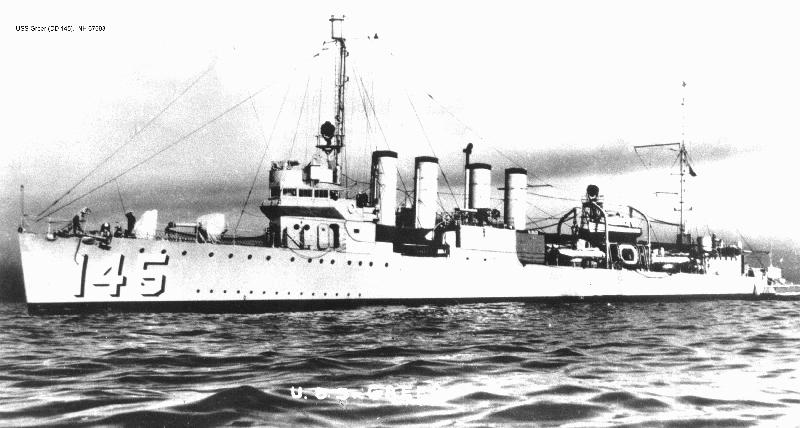
USS Greer, DD-145


Em 4 de setembro de 1941, o USS Greer, um destróier da classe Wickes, navegava em águas próximas a Noruega, quando recebeu um sinal de um bombardeiro britânico, avisando que um submarino alemão estava por perto (identificado posteriormente como o U-652).
U-652
U-652


O Greer conseguiu localizar o submarino pelo sonar, e começou a persegui-lo. O bombardeiro disparou cargas de profundidade, e o submarino respondeu atacando o Greer, disparando um torpedo, provavelmente achando que este havia feito o primeiro ataque.

O incidente durou cerca de duas horas, com o Greer tendo disparado 19 cargas de profundidade, e o submarino tendo disparado mais um torpedo, sem resultados.

Em reação ao incidemte, o presidente americano Franklin Delano Roosevelt, ordena a marinha americana a atirar ao ver qualquer navio inimigo que ameaçe navios ou comboios em ajuda, em um pronunciamento no rádio, no dia 11 de setembro de 1941.

Acompanhe o pronunciamento (com áudio, estou fazendo alguns testes com o Google Tradutor..., clique em Google Tradutor para traduzir o discurso :-)


My fellow Americans:

The Navy Department of the United States has reported to me that on the morning of September fourth the United States destroyer GREER, proceeding in full daylight towards Iceland, had reached a point southeast of Greenland. She was carrying American mail to Iceland. She was flying the American flag. Her identity as an American ship was unmistakable.

She was then and there attacked by a submarine. Germany admits that it was a German submarine. The submarine deliberately fired a torpedo at the GREER, followed later by another torpedo attack. In spite of what Hitler's propaganda bureau has invented, and in spite of what any American obstructionist organization may prefer to believe, I tell you the blunt fact that the German submarine fired first upon this American destroyer without warning, and with deliberate design to sink her.

Our destroyer, at the time, was in waters which the Government of the United States had declared to be waters of self-defense -- surrounding outposts of American protection in the Atlantic.

In the North of the Atlantic, outposts have been established by us in Iceland, in Greenland, in Labrador and in Newfoundland. Through these waters there pass many ships of many flags. They bear food and other supplies to civilians; and they bear material of war, for which the people of the United States are spending billions of dollars, and which, by Congressional action, they have declared to be essential for the defense of (their) our own land.

The United States destroyer, when attacked, was proceeding on a legitimate mission.

If the destroyer was visible to the submarine when the torpedo was fired, then the attack was a deliberate attempt by the Nazis to sink a clearly identified American warship. On the other hand, if the submarine was beneath the surface of the sea and, with the aid of its listening devices, fired in the direction of the sound of the American destroyer without even taking the trouble to learn its identity -- as the official German communique would indicate -- then the attack was even more outrageous. For it indicates a policy of indiscriminate violence against any vessel sailing the seas --belligerent or non-belligerent.

This was piracy -- piracy legally and morally. It was not the first nor the last act of piracy which the Nazi Government has committed against the American flag in this war. For attack has followed attack.

A few months ago an American flag merchant ship, the ROBIN MOOR, was sunk by a Nazi submarine in the middle of the South Atlantic, under circumstances violating long-established international law and violating every principle of humanity. The passengers and the crew were forced into open boats hundreds of miles from land, in direct violation of international agreements signed by nearly all nations including the Government of Germany. No apology, no allegation of mistake, no offer of reparations has come from the Nazi Government.

In July, 1941, nearly two months ago an American battleship in North American waters was followed by a submarine which for a long time sought to maneuver itself into a position of attack upon the battleship. The periscope of the submarine was clearly seen. No British or American submarines were within hundreds of miles of this spot at the time, so the nationality of the submarine is clear.

Five days ago a United States Navy ship on patrol picked up three survivors of an American-owned ship operating under the flag of our sister Republic of Panama -- the S. S. SESSA. On August seventeenth, she had been first torpedoed without warning, and then shelled, near Greenland, while carrying civilian supplies to Iceland. It is feared that the other members of her crew have been drowned. In view of the established presence of German submarines in this vicinity, there can be no reasonable doubt as to the identity of the flag of the attacker.

Five days ago, another United States merchant ship, the STEEL SEAFARER, was sunk by a German aircraft in the Red Sea two hundred and twenty miles south of Suez. She was bound for an Egyptian port.

So four of the vessels sunk or attacked flew the American flag and were clearly identifiable. Two of these ships were warships of the American Navy. In the fifth case, the vessel sunk clearly carried the flag of our sister Republic of Panama.

In the face of all this, we Americans are keeping our feet on the ground. Our type of democratic civilization has outgrown the thought of feeling compelled to fight some other nation by reason of any single piratical attack on one of our ships. We are not becoming hysterical or losing our sense of proportion. Therefore, what I am thinking and saying tonight does not relate to any isolated episode.

Instead, we Americans are taking a long-range point of view in regard to certain fundamentals (and) -- a point of view in regard to a series of events on land and on sea which must be considered as a whole -- as a part of a world pattern.

It would be unworthy of a great nation to exaggerate an isolated incident, or to become inflamed by some one act of violence. But it would be inexcusable folly to minimize such incidents in the face of evidence which makes it clear that the incident is not isolated, but is part of a general plan.

The important truth is that these acts of international lawlessness are a manifestation of a design (which) -- a design that has been made clear to the American people for a long time. It is the Nazi design to abolish the freedom of the seas, and to acquire absolute control and domination of (the) these seas for themselves.

For with control of the seas in their own hands, the way can obviously become clear for their next step -- domination of the United States (and the) -- domination of the Western Hemisphere by force of arms. Under Nazi control of the seas, no merchant ship of the United States or of any other American Republic would be free to carry on any peaceful commerce, except by the condescending grace of this foreign and tyrannical power. The Atlantic Ocean which has been, and which should always be, a free and friendly highway for us would then become a deadly menace to the commerce of the United States, to the coasts of the United States, and even to the inland cities of the United States.

The Hitler Government, in defiance of the laws of the sea, (and) in defiance of the recognized rights of all other nations, has presumed to declare, on paper, that great areas of the seas -- even including a vast expanse lying in the Western Hemisphere -- are to be closed, and that no ships may enter them for any purpose, except at peril of being sunk. Actually they are sinking ships at will and without warning in widely separated areas both within and far outside of these far-flung pretended zones.

This Nazi attempt to seize control of the oceans is but a counterpart of the Nazi plots now being carried on throughout the Western Hemisphere -- all designed toward the same end. For Hitler's advance guards -- not only his avowed agents but also his dupes among us -- have sought to make ready for him footholds, (and) bridgeheads in the New World, to be used as soon as he has gained control of the oceans.

His intrigues, his plots, his machinations, his sabotage in this New World are all known to the Government of the United States. Conspiracy has followed conspiracy. For example, last year a plot to seize the Government of Uruguay was smashed by the prompt action of that country, which was supported in full by her American neighbors. A like plot was then hatching in Argentina, and that government has carefully and wisely blocked it at every point. More recently, an endeavor was made to subvert the government of Bolivia. And within the past few weeks the discovery was made of secret air-landing fields in Colombia, within easy range of the Panama Canal. I could multiply instance(s) upon instance.

To be ultimately successful in world mastery, Hitler knows that he must get control of the seas. He must first destroy the bridge of ships which we are building across the Atlantic and over which we shall continue to roll the implements of war to help destroy him, (and)to destroy all his works in the end. He must wipe out our patrol on sea and in the air if he is to do it. He must silence the British Navy.

I think it must be explained (again and) over and over again to people who like to think of the United States Navy as an invincible protection, that this can be true only if the British Navy survives. And that, my friends, is simple arithmetic.

For if the world outside of the Americas falls under Axis domination, the shipbuilding facilities which the Axis powers would then possess in all of Europe, in the British Isles and in the Far East would be much greater than all the shipbuilding facilities and potentialities of all of the Americas -- not only greater, but two or three times greater, enough to win. Even if the United States threw all its resources into such a situation, seeking to double and even redouble the size of our Navy, the Axis powers, in control of the rest of the world, would have the manpower and the physical resources to outbuild us several times over.

It is time for all Americans, Americans of all the Americas to stop being deluded by the romantic notion that the Americas can go on living happily and peacefully in a Nazi-dominated world.

Generation after generation, America has battled for the general policy of the freedom of the seas. And that policy is a very simple one, but a basic, a fundamental one. It means that no nation has the right to make the broad oceans of the world at great distances from the actual theatre of land war, unsafe for the commerce of others.

That has been our policy, proved time and (time) again, in all of our history. Our policy has applied from (time immemorial) the earliest days of the Republic -- and still applies -- not merely to the Atlantic but to the Pacific and to all other oceans as well.

Unrestricted submarine warfare in 1941 constitutes defiance -- an act of aggression -- against that historic American policy.

It is now clear that Hitler has begun his campaign to control the seas by ruthless force and by wiping out every vestige of international law, (and) every vestige of humanity.

His intention has been made clear. The American people can have no further illusions about it.

No tender whisperings of appeasers that Hitler is not interested in the Western Hemisphere, no soporific lullabies that a wide ocean protects us from him -- can long have any effect on the hard-headed, far-sighted and realistic American people.

Because of these episodes, because of the movements and operations of German warships, and because of the clear, repeated proof that the present government of Germany has no respect for treaties or for international law, that it has no decent attitude toward neutral nations or human life -- we Americans are now face to face not with abstract theories but with cruel, relentless facts.

This attack on the GREER was no localized military operation in the North Atlantic. This was no mere episode in a struggle between two nations. This was one determined step towards creating a permanent world system based on force, on terror and on murder.

And I am sure that even now the Nazis are waiting, waiting to see whether the United States will by silence give them the green light to go ahead on this path of destruction.

The Nazi danger to our Western world has long ceased to be a mere possibility. The danger is here now -- not only from a military enemy but from an enemy of all law, all liberty, all morality, all religion.

There has now come a time when you and I must see the cold inexorable necessity of saying to these inhuman, unrestrained seekers of world conquest and permanent world domination by the sword: "You seek to throw our children and our children's children into your form of terrorism and slavery. You have now attacked our own safety. You shall go no further."

Normal practices of diplomacy -- note writing -- are of no possible use in dealing with international outlaws who sink our ships and kill our citizens.

One peaceful nation after another has met disaster because each refused to look the Nazi danger squarely in the eye until it had actually had them by the throat.

The United States will not make that fatal mistake.

No act of violence, (or) no act of intimidation will keep us from maintaining intact two bulwarks of American defense: First, our line of supply of material to the enemies of Hitler; and second, the freedom of our shipping on the high seas.

No matter what it takes, no matter what it costs, we will keep open the line of legitimate commerce in these defensive water of ours.

We have sought no shooting war with Hitler. We do not seek it now. But neither do we want peace so much, that we are willing to pay for it by permitting him to attack our naval and merchant ships while they are on legitimate business.

I assume that the German leaders are not deeply concerned, tonight or any other time, by what we Americans or the American Government say or publish about them. We cannot bring about the downfall of Nazi-ism by the use of long-range invective.

But when you see a rattlesnake poised to strike, you do not wait until he has struck before you crush him.

These Nazi submarines and raiders are the rattlesnakes of the Atlantic. They are a menace to the free pathways of the high seas. They are a challenge to our own sovereignty. They hammer at our most precious rights when they attack ships of the American flag -- symbols of our independence, our freedom, our very life.

It is clear to all Americans that the time has come when the Americas themselves must now be defended. A continuation of attacks in our own waters or in waters (which) that could be used for further and greater attacks on us, will inevitably weaken our American ability to repel Hitlerism.

Do not let us (split hairs) be hair-splitters. Let us not ask ourselves whether the Americas should begin to defend themselves after the (fifth) first attack, or the (tenth) fifth attack, or the tenth attack, or the twentieth attack.

The time for active defense is now.

Do not let us split hairs. Let us not say : "We will only defend ourselves if the torpedo succeeds in getting home, or if the crew and the passengers are drowned".

This is the time for prevention of attack.

If submarines or raiders attack in distant waters, they can attack equally well within sight of our own shores. Their very presence in any waters which America deems vital to its defense constitutes an attack.

In the waters which we deem necessary for our defense, American naval vessels and American planes will no longer wait until Axis submarines lurking under the water, or Axis raiders on the surface of the sea, strike their deadly blow -- first.

Upon our naval and air patrol -- now operating in large number over a vast expanse of the Atlantic Ocean -- falls the duty of maintaining the American policy of freedom of the seas -- now. That means, very simply, (and) very clearly, that our patrolling vessels and planes will protect all merchant ships -- not only American ships but ships of any flag -- engaged in commerce in our defensive waters. They will protect them from submarines; they will protect them from surface raiders.

This situation is not new. The second President of the United States, John Adams, ordered the United States Navy to clean out European privateers and European ships of war which were infesting the Caribbean and South American waters, destroying American commerce.

The third President of the United States, Thomas Jefferson, ordered the United States Navy to end the attacks being made upon American and other ships by the corsairs of the nations of North Africa.

My obligation as President is historic; it is clear. Yes, it is inescapable.

It is no act of war on our part when we decide to protect the seas (which) that are vital to American defense. The aggression is not ours. Ours is solely defense.

But let this warning be clear. From now on, if German or Italian vessels of war enter the waters, the protection of which is necessary for American defense, they do so at their own peril.

The orders which I have given as Commander-in-Chief (to) of the United States Army and Navy are to carry out that policy -- at once.

The sole responsibility rests upon Germany. There will be no shooting unless Germany continues to seek it.

That is my obvious duty in this crisis. That is the clear right of this sovereign nation. (That) This is the only step possible, if we would keep tight the wall of defense which we are pledged to maintain around this Western Hemisphere.

I have no illusions about the gravity of this step. I have not taken it hurriedly or lightly. It is the result of months and months of constant thought and anxiety and prayer. In the protection of your nation and mine it cannot be avoided.

The American people have faced other grave crises in their history -- with American courage, (and) with American resolution. They will do no less today.
They know the actualities of the attacks upon us. They know the necessities of a bold defense against these attacks. They know that the times call for clear heads and fearless hearts.

And with that inner strength that comes to a free people conscious of their duty, (and) conscious of the righteousness of what they do, they will -- with Divine help and guidance -- stand their ground against this latest assault upon their democracy, their sovereignty, and their freedom.


Fontes consultadas:
  • http://www.ibiblio.org/pha/paw/235.html
  • http://en.wikipedia.org/wiki/USS_Greer_%28DD-145%29#The_Greer_Incident.2C_Sept._1941
  • http://en.wikipedia.org/wiki/German_submarine_U-652
  • http://www.ibiblio.org/pha/7-2-188/188-29.html
  • http://millercenter.org/president/speeches/detail/3323

quarta-feira, 6 de julho de 2011

Speech: To the italian people

Back in 2010, I had reproduced a speech by W. Churchill addressed to the Italian people. On this year I was running the blog in Portuguese, but this is the article most readed on the blog. So, I decided to translate the heading of the article, and add some other details about the speech.

Speech of Winston Churchill, addressed to the italian people, broadcast in December 23, 1940.


Tonight I speak to the Italian people and I speak to you from London, the heart of the British islands and of the British Commonwealth and Empire. I speak to you in what the diplomatists call "words of great truth and respect."

We are at war. That is a very strange, and terrible thought. Whoever imagined until the last few melancholy years that the British and Italian nations would be trying to destroy one another? We have always been such friends.

We were the champions of the Italian Risorgimento. We were the partisans of Garibaldi. We were the admirers of Mazzini and Cavour - all that great movement toward the unity of the Italian nation which lighted the nineteenth century was aided and was hailed by the British Parliament and British public.

Our fathers, and our grandfathers longed to see Italy freed from the Austrian yoke and to see all minor barriers in Italy swept away so that the Italian people and their fair land might take an honoured place as one of the leading powers upon the Continent and as a brilliant and gifted member of the family of Europe and of Christendom.

The Italian Offensive 1940 - 1941: British troops, sitting on captured Italian motorcycles, read copies of the congratulatory telegram sent to all units after their victory by the Secretary of State for War, Mr Anthony Eden. From: http://ww2today.com


We have never been your foes till now. In the last war against the barbarous Huns we were your comrades. For fifteen years after that war, we were your friends. Although the institutions which you adopted after that war were not akin to ours and diverged, as we think, from the sovereign impulses which had commanded the unity of Italy, we could still walk together in peace and good-will. Many thousands of your people dwelt with ours in England; many of our people dwelt with you in Italy.

We liked each other. We got on well together. There were reciprocal services, there was amity, there was esteem. And now we are at war - now we are condemned to work each other's ruin.

Your aviators have tried to cast their bombs upon London. Our armies are tearing - and will tear - your African empire to shreds and tatters. We are now only at the beginning of this sombre tale. Who can say where it will end? Presently, we shall be forced to come to much closer grips. How has all this come about, and what is it all for?

Italians, I will tell you the truth.

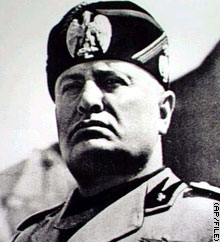
It is all because of one man - one man and one man alone has ranged the Italian people in deadly struggle against the British Empire and has deprived Italy of the sympathy and intimacy of the United States of America.

That he is a great man I do not deny. But that after eighteen years of unbridled power he has led your country to the horrid verge of ruin - that can be denied by none.

It is all one man - one man, who, against the crown and royal family of Italy, against the Pope and all the authority of the Vatican and of the Roman Catholic Church, against the wishes of the Italian people who had no lust for this war; one man has arrayed the trustees and inheritors of ancient Rome upon the side of the ferocious pagan barbarians.


There lies the tragedy of Italian history and there stands the criminal who has wrought the deed of folly and of shame.

What is the defence that is put forward for his action? It is, of course, the quarrel about sanctions and Abyssinia. Let us look at that.

Together after the last war Italy and Britain both signed the covenant of the League of Nations, which forbade all parties to that covenant to make war upon each other or upon fellow-members of the League, and bound all signatories to come to the aid of any member attacked by another.

Presently Abyssinia came knocking at the door, asking to be a member. We British advised against it. We doubted whether they had reached a stage in their development which warranted their inclusion in so solemn a pact. But it was Signor Mussolini who insisted that Abyssinia should become a member of the League and who, therefore, bound himself and bound you and us to respect their covenanted rights.

Thus the quarrel arose; it was out of this that it sprang. And thus, although no blood was shed between us, old friendships were forgotten.

But what is the proportion of this Abyssinian dispute arising out of the covenant of the League of Nations, to which we had both pledged our word; what is it in proportion compared to the death grapple in which Italy and Britain have now been engaged?

I declare - and my words will go far - that nothing that has happened in that Abyssinian quarrel can account for or justify the deadly strife which has now broken out between us.

Time passed. Then the great war between the British and French democracies and Prussian militarism or Nazi overlordship began again.


Where was the need for Italy to intervene? Where was the need to strike at prostrate France? Where was the need to declare war on Britain? Where was the need to invade Egypt, which is under British protection?

We were content with Italian neutrality. During the first eight months of the war we paid great deference to Italian interests. But all this was put down to fear. We were told we were effete, worn out, an old chatterbox people mouthing outworn shibboleths of nineteenth-century liberalism.

But it was not due to fear. It was not due to weakness. The French Republic for the moment is stunned. France will rise again. But the British nation and Commonwealth of Nations across the globe, and indeed I may say the English-speaking world, are now aroused. They are on the march or on the move. All the forces of modern progress and of ancient culture are ranged behind them.

Why have you placed yourselves, you who were our friends and might have been our brothers, why have you placed yourselves in the path of this avalanche, now only just started from its base to roll forward on its pre-destined track? Why, after all this, were you made to attack and invade Greece? I ask why, but you may ask why, too, because you were never consulted. The people of Italy were never consulted. The Army of Italy was never consulted. No one was consulted.

One man, and one man alone, ordered Italian soldiers to ravage their neighbour's vineyard.

Surely the time has come when the Italian monarchy and people, who guard the sacred center of Christendom, should have a word to say upon these awe-inspiring issues. Surely the Italian Army, which has fought so bravely on many occasions in the past but now evidently has no heart for the job, should take some care of the life and future of Italy.


I can only tell you that I, Churchill, have done my best to prevent this war between Italy and the British Empire, and to prove my words I will read you the message which I sent to Signor Mussolini in the fateful days before it began. Cast your minds back to the 16th of May of this year, 1940. The French front had been broken; the French Army was not yet defeated; the great battle in France was still raging. Here is the message which I sent to Signor Mussolini:

"Now that I have taken up my office as Prime Minister and Minister of Defence, I look back to our meetings in Rome and feel a desire to speak words of good-will to you, as chief of the Italian nation, across what seems to be a swiftly widening gulf. Is it too late to stop a river of blood from flowing between the British and Italian peoples?

"We can, no doubt, inflict grievous injuries upon one another and maul each other cruelly and darken the Mediterranean with our strife. If you so decree, it must be so. But I declare that I have never been the enemy of Italian greatness, nor ever at heart the foe of the Italian lawgiver. It is idle to predict the course of the great battles now raging in Europe. But I am sure that whatever may happen on the continent, England will go on to the end, even quite alone, as we have done before; and I believe, with some assurance, that we shall be aided in increasing measure by the United States and, indeed, by all the Americas.

"I beg of you to believe that it is in no spirit of weakness or of fear that I make this solemn appeal, which will remain on record. Down the ages, above all other calls, comes the cry that the joint heirs of Latin and Christian civilization must not be ranged against one another in mortal strife. Hearken to it, I beseech you in all honor and respect, before the dread signal is given. It will never be given by us."


That is what I wrote upon the 16th day of May. And this is the reply which I received from Signor Mussolini upon the 18th:

"I reply to the message which you have sent me in order to tell you that you are certainly aware of grave reasons of a historical and contingent character which ranged our two countries in opposite camps.

"Without going back very far in time, I remind you of the initiative taken in 1935 by your government to organize at Geneva sanctions against Italy, engaged in securing for herself a small space in the African sun without causing the slightest injury to your interests and territories or those of others. I remind you also of the real and actual state of servitude in which Italy finds herself in her own sea. If it was to honour your signature that your government declared war on Germany, you will understand that the same sense of honour and of respect for engagements assumed in the Italian - German treaty guides Italian policy today and tomorrow in the face of any event whatsoever."

That was the answer; I make no comment upon it. It was a dusty answer; it speaks for itself. Any one can see who it was that wanted peace and who it was that meant to have war.

One man and one man only was resolved to plunge Italy, after all these years of strain and effort, into the whirlpool of war.

Calling in "Attila"

And what is the position of Italy today? Where is it that the Duce has led his trusting people after eighteen years of dictatorial power? What hard choice is open to them now?

It is to stand up to the battery of the whole British Empire on sea, in the air and in Africa, and to the vigorous counter-attack of the Greek nation. Or, on the other hand, to call in Attila over the Brenner Pass with his hordes of ravenous soldiery and his gangs of Gestapo policemen to occupy, to hold down and to protect the Italian people, for whom he and his Nazi followers cherish the most bitter and outspoken contempt that is on record between races.

There is where one man, and one man only, has led you. And there I leave this unfolding story until the day comes - as come it will - when the Italian nation will once more take a hand in shaping its own fortunes.

(Transcrição: wadsworth.com)

quinta-feira, 17 de fevereiro de 2011

Speech: The Birth Throes of a Sublime Resolve ("The Old Lion", 1941-06-16)


I am grateful, President Valentine, for the honour which you have conferred upon me in making me a Doctor of Laws of the University of Rochester in the State of New York. I am extremely complimented by the expressions of praise and commendation in which you have addressed me, not because I am or ever can be worthy of them, but because they are an expression of American confidence and affection which I shall ever strive to deserve.
But what touches me most in this ceremony is that sense of kinship and of unity, which I feel exists between us this afternoon. As I speak from Downing Street to the University of Rochester and through you to the people of the United States, I almost feel I have the right to do so, because my mother, as you have stated, was born in your city, and here my grandfather, Leonard Jerome, lived for so many years, conducting as prominent and rising citizen a newspaper with the excellent eighteenth-century title of the Plain Dealer.
The great Burke has truly said, "People will not look forward to posterity who never look backward to their ancestors," and I feel it most agreeable to recall to you that the Jeromes were rooted for many generations in American soil, and fought in Washington's armies for the independence of the American Colonies and the foundation of the United States. I expect I was on both sides then. And I must say I feel on both sides of the Atlantic Ocean now.
At intervals during the last forty years I have addressed scores of great American audiences in almost every part of the Union. I have learnt to admire the courtesy of these audiences; their sense of fair play; their sovereign sense of humour, never minding the joke that is turned against themselves; their earnest, voracious desire to come to the root of the matter and to be well and truly informed on Old World affairs.
And now, in this time of world storm, when I have been called upon by King and Parliament and with the support of all parties in the State to bear the chief responsibility in Great Britain, and when I have had the supreme honour of speaking for the British nation in its most deadly danger and in its finest hour, it has given me comfort and inspiration to feel that I think as you do, that our hands are joined across the oceans, and that our pulses throb and beat as one. Indeed I will make so bold as to say that here at least, in my mother's birth city of Rochester, I hold a latchkey to American hearts.
Strong tides of emotion, fierce surges of passion, sweep the broad expanses of the Union in this year of fate. In that prodigious travail there arc many elemental forces, there is much heart-searching and self-questioning; some pangs, some sorrow, some conflict of voices, but no fear. The world is witnessing the birth throes of a sublime resolve. I shall presume to confess to you that I have no doubts what that resolve will be.
The destiny of mankind is not decided by material computation. When great causes are on the move in the world, stirring all men's souls, drawing them from their firesides, casting aside comfort, wealth and the pursuit of happiness in response to impulses at once awe-striking and irresistible, we learn that we are spirits, not animals, and that something is going on in space and time, and beyond space and time, which, whether we like it or not, spells duty.
A wonderful story is unfolding before our eyes. How it will end we are not allowed to know. But on both sides of the Atlantic we all feel, I repeat, all, that we are a part of it, that our future and that of many generations is at stake. We are sure that the character of human society will be shaped by the resolves we take and the deeds we do. We need not bewail the fact that we have been called upon to face such solemn responsibilities. We may be proud, and even rejoice amid our tribulations, that we have been born at this cardinal time for so great an age and so splendid an opportunity of service here below.
Wickedness, enormous, panoplied, embattled, seemingly triumphant, casts its shadow over Europe and Asia. Laws, customs and traditions are broken up. Justice is cast from her seat. The rights of the weak are trampled down. The grand freedoms of which the President of the United States has spoken so movingly are spurned and chained. The whole stature of man, his genius, his initiative and his nobility, is ground down under systems of mechanical barbarism and of organized and scheduled terror.

For more than a year we British have stood alone, uplifted by your sympathy and respect and sustained by our own unconquerable will-power and by the increasing growth and hopes of your massive aid. In these British Islands that look so small upon the map we stand, the faithful guardians of the rights and dearest hopes of a dozen States and nations now gripped and tormented in a base and cruel servitude. Whatever happens we shall endure to the end.
But what is the explanation of the enslavement of Europe by the German Nazi regime? How did they do it? It is but a few years ago since one united gesture by the peoples, great and small, who are now broken in the dust, would have warded off from mankind the fearful ordeal it has had to undergo. But there was no unity. There was no vision. The nations were pulled down one by one while the others gaped and chattered. One by one, each in his turn, they let themselves be caught. One after another they were felled by brutal violence or poisoned from within by subtle intrigue.
And now the old lion with her lion cubs at her side stands alone against hunters who are armed with deadly weapons and impelled by desperate and destructive rage. Is the tragedy to repeat itself once more? All no! This is not the end of the tale. The stars in their courses proclaim the deliverance of mankind. Not so easily shall the onward progress of the peoples be barred. Not so easily shall the lights of freedom die.
But time is short. Every month that passes adds to the length and to the perils of the journey that will have to be made. United we stand. Divided we fall. Divided, the dark age returns. United, we can save and guide the world!

Speech: Until Victory is Won (1941-06-12)


(Yeap, the sound could be better. )


In the twenty-second month of the war against Nazism we meet here in this old Palace of St. James’s, itself not unscarred by the fire of the enemy, in order to proclaim the high purposes and resolves of the lawful constitutional Governments of Europe whose countries have been overrun ; and we meet here also to cheer the hopes of free men and free peoples throughout the world. Here before us on the table lie the title-deeds of ten nations or States whose soil has been invaded and polluted, and whose men, women, and children lie prostrate or writhing under the Hitler yoke. But here also, duly authorized by the Parliament and democracy of Britain, are gathered the servants of the ancient British Monarchy and the accredited representatives of the British Dominions beyond the seas, of Canada, Australia, New Zealand, and South Africa, of the Empire of India, of Burma, and of our Colonies in every quarter of the globe. They have drawn their swords in this cause. They will never let them fall till life is gone or victory is won. Here we meet, while from across the Atlantic Ocean the hammers and lathes of the United States signal in a rising hum their message of encouragement and their promise of swift and ever-growing aid.

What tragedies, what horrors, what crimes have Hitler and all that Hitler stands for brought upon Europe and the world ! The ruins of Warsaw, of Rotterdam, of Belgrade are monuments which will long recall to future generations the outrage of the unopposed air-bombing applied with calculated scientific cruelty to helpless populations. Here in London and throughout the cities of our Island, and in Ireland, there may also be seen the marks of devasta­tion. They are being repaid, and presently they will be more than repaid.

But far worse than these visible injuries is the misery of the conquered peoples. We see them hounded, terrorized, exploited. Their manhood by the million is forced to work under conditions indistinguishable in many cases from actual slavery. Their goods and chattels are pillaged, or filched for worthless money. Their homes, their daily life are pried into and spied upon by the all-pervading system of secret political police which, having reduced the Germans themselves to abject docility, now stalk the streets and byways of a dozen lands. Their religious faiths are affronted, persecuted, or oppressed in the interests of a fantastic paganism devised to perpetuate the worship and sustain the tyranny of one abominable creature. Their traditions, their culture, their laws, their institutions, social and political alike, are suppressed by force or undermined by subtle, coldly-planned intrigue.

The prisons of the Continent no longer suffice. The concen­tration camps are overcrowded. Every dawn the German volleys crack. Czechs, Poles, Dutchmen, Norwegians, Yugoslavs and Greeks, Frenchmen, Belgians, Luxembourgers, make the great sacrifice for faith and country. A vile race of quislings—to use the new word which will carry the scorn of mankind down the centuries—is hired to fawn upon the conqueror, to collaborate in his designs, and to enforce his rule upon their fellow-countrymen, while grovelling low themselves. Such is the plight of once glorious Europe, and such are the atrocities against which we are in arms.

It is upon this foundation that Hitler, with his tattered lackey Mussolini at his tail and Admiral Darlan frisking by his side, pretends to build out of hatred, appetite, and racial assertion a new order for Europe. Never did so mocking a fantasy obsess the mind of mortal man. We cannot tell what the course of this fell war will be as it spreads remorseless through ever-wider regions. We know it will be hard, we expect it will be long ; we cannot predict or measure its episodes or its tribulations. But one thing is certain, one thing is sure, one thing stands out stark and undeniable, massive and unassailable, for all the world to see.

It will not be by German hands that the structure of Europe will be rebuilt or the union of the European family achieved. In every country into which the German armies and the Nazi police have broken there has sprung up from the soil a hatred of the German name and a contempt for the Nazi creed which the passage of hundreds of years will not efface from human memory. We cannot yet see how deliverance will come, or when it will come, but nothing is more certain than that every trace of Hitler’s footsteps, every stain of his infected and corroding fingers will be sponged and purged and, if need be, blasted from the surface of the earth.

We are here to affirm and fortify our union in that ceaseless and unwearying effort which must be made if the captive peoples are to be set free. A year ago His Majesty’s Government was left alone to face the storm, and to many of our friends and enemies alike it may have seemed that our days too were numbered, and that Britain and its institutions would sink for ever beneath the verge. But I may with some pride remind your Excellencies that, even in that dark hour when our Army was disorganized and almost weapon­less, when scarcely a gun or a tank remained in Britain, when almost all our stores and ammunition had been lost in France, never for one moment did the British people dream of making peace with the conqueror, and never for a moment did they despair of the common cause. On the contrary, we proclaimed at that very time to all men, not only to ourselves, our determination not to make peace until every one of the ravaged and enslaved countries was liberated and until the Nazi domination was broken and destroyed.

See how far we have travelled since those breathless days of June a year ago. Our solid, stubborn strength has stood the awful test. We are masters of our own air, and now reach out in ever­growing retribution upon the enemy. The Royal Navy holds the seas. The Italian fleet cowers diminished in harbour, the German Navy is largely crippled or sunk. The murderous raids upon our ports, cities, and factories have been powerless to quench the spirit of the British nation, to stop our national life, or check the immense expansion of our war industry. The food and arms from across the oceans are coming safely in. Full provision to replace all sunken tonnage is being made here, and still more by our friends in the United States. We are becoming an armed community. Our land forces are being perfected in equipment and training.

Hitler may turn and trample this way and that through tortured Europe. He may spread his course far and wide, and carry his curse with him : he may break into Africa or into Asia. But it is here, in this island fortress, that he will have to reckon in the end. We shall strive to resist by land and sea. We shall be on his track wherever he goes. Our air power will continue to teach the German homeland that war is not all loot and triumph. We shall aid and stir the people of every conquered country to resistance and revolt. We shall break up and derange every effort which Hitler makes to systematize and consolidate his subjugation. He will find no peace, no rest, no halting-place, no parley. And if, driven to desperate hazards, he attempts the invasion of the British Isles, as well he may, we shall not flinch from the supreme trial. With the help of God, of which we must all feel daily conscious, we shall continue steadfast in faith and duty till our task is done.

This, then, is the message which we send forth to-day to all the States and nations bond or free, to all the men in all the lands who care for freedom’s cause, to our allies and well-wishers in Europe, to our American friends and helpers drawing ever closer in their might across the ocean : this is the message—Lift up your hearts. All will come right. Out of the depths of sorrow and sacrifice will be born again the glory of mankind.

Source: http://www.mail-archive.com/churchillchat@googlegroups.com/msg00470/Until_Victory_is_Won.doc