
quarta-feira, 30 de junho de 2010


segunda-feira, 28 de junho de 2010
Próximas aquisições
Estão na minha lista de próximas leituras:
- The Bitter Woods: The Battle of the Bulge. John S. D. Eisenhower
- The Guns of August. Barbara W. Tuchman
- O Incêndio. Jörg Friedrich
The longest day: algumas citações
The phone just as the shelling began again. The same voice he had heard earlier demanded to know "the exact location of the shelling". "For God's sake", Pluskat yelled, "they're falling all over. What do you want me to do - go out and measure the holes with a ruler?" Página 189.
The great square-faced ramps of the assault craft butted into every wave, and chilling, frothing green water sloshed over eveyone. There were no heroes in these boats - just cold, miserable, anxios men, so jam-packed together, so weighed down by equipment that often there was no place to be seasick except over one anothe. Newsweek's Kenneth Crawford, in the first Utah wave, saw a young 4th Division soldier, covered with his own vomit, slowly shaking head in abject misery and disgust. "That guy Higgins," he said, 'ain't got nothin' to be proud of about inventin' this goddammed boat." Página 191.
In his bomb crater at the top of the cliff, Segeant Petty and his four-man BAR team sat exhausted after the climb. A little haze driffted over the churned, pitted earth and the smell of cordite was heavy in the air. Petty stared almost dreamily around him. Then on the edge of the crater he saw two sparrows eating worms. "Look", said Petty to the others, "they're having breakfast." Página 213.
... They lost all of their equipment and had to swim in under machine-gun fire. As they struggled in the water, Gardner heard someone say, "Perhaps we're intruding, this seems to be a private beach." Página 217.
... Then he said to the soldier with him, "Look at the super blokes - just look at them. Here, take them of my sight." He walked away to make himself a cup of tea to soothe his anger. While he was heating a canteen of water over a Sterno can a officer "with the down still on his chin" walked over and said sternly, "Now look here, Sergeant, this is no thime to be making tea." De Lacy looked up and, as patiently as his twenty-one years of Army service would allow, replied, "Sir, we are not playing at soldiers now - this is real war, Why don't you come back in five minutes and have a nice cup of tea?" The officer did. Página 221.
All along the Normandy coastline the invasion stormed. For the French, caught up in the battle, these were hours of chaos, elation and terror. Around Ste.-Mère-Église, which was now being heavily shelled, 82nd paratroopers saw farmers calmly working in the fields as though nothing were happening.Every now and then one of them would fall, either wounded or killed. In the town itself paratroopers watched the local barber remove the sign "Friseur" from the front of his shop and put a new one that said "Barber." Página 249.
[Eisenhower], In case the attempt to land troops was defeated, he had written: "Our landings in the Cherbourg-Havre area have failed to gain a satisfactory footholdand I have withdrawn the troops. My deciosion of attack at the time and place was based upon the best information available. The troops, the air and Navy did all the that bravery and devotion to duty could do. If there is any blame or fault attached to athe attempt, it is mine alone." Página 255.
... Immediately she called Frau Sauer, who had also heard something about the attack, and canceld the movie date. "I must know what has happened to Werner," she said. "I may never see him again.". Frau Sauer was very abrupt and very Prussian. "You shouldn't act like this!" snapped Frau Sauer. "You should believe the Führer and act like a good officer's wife.". Frau Pluskat shot back, "I'll never talk to you again!" The she slammed down the phone. Página 259.
Segeant Thomas Bruff of the 101st watched a 4th Division scout come off the causeway near Poppeville, "carying his rifle like a squirrel gun." The scout looked at the weary Bruff. "Where is the war?" he inquired. Bruff, who had landed eight miles from his drop zone and had fought all night with a small group under the command of General Maxwell Taylor, growled at the soldier. "Anywhere from here on back. Keep going, buddy, you'll find it." Página 262.
Near the top of the Vierville bluff, Ranger Private First Class Carl Weast and his company commander, Captain George Whittington, spotted a machine-gun nest manned by three Germans. As Weast and the captain circled it cautiously, one of the Germans suddenly turned, saw the two Americans and yelled, "Bitte! Bitte! Bitte!" Whittington fired, killing all tree. Turning to Weast he said, "I wonder what bitte means." Página 266.
Lang was very angry and shocked. Forgetting for a moment he was talking to a general, he snapped, "How can you possible play opera at a time like this?" Speidel smiled and said, "My dear Lang, you don't think that my playing a little music is going to stop the invasion, now do you?" Página 276.
The great square-faced ramps of the assault craft butted into every wave, and chilling, frothing green water sloshed over eveyone. There were no heroes in these boats - just cold, miserable, anxios men, so jam-packed together, so weighed down by equipment that often there was no place to be seasick except over one anothe. Newsweek's Kenneth Crawford, in the first Utah wave, saw a young 4th Division soldier, covered with his own vomit, slowly shaking head in abject misery and disgust. "That guy Higgins," he said, 'ain't got nothin' to be proud of about inventin' this goddammed boat." Página 191.
In his bomb crater at the top of the cliff, Segeant Petty and his four-man BAR team sat exhausted after the climb. A little haze driffted over the churned, pitted earth and the smell of cordite was heavy in the air. Petty stared almost dreamily around him. Then on the edge of the crater he saw two sparrows eating worms. "Look", said Petty to the others, "they're having breakfast." Página 213.
... They lost all of their equipment and had to swim in under machine-gun fire. As they struggled in the water, Gardner heard someone say, "Perhaps we're intruding, this seems to be a private beach." Página 217.
... Then he said to the soldier with him, "Look at the super blokes - just look at them. Here, take them of my sight." He walked away to make himself a cup of tea to soothe his anger. While he was heating a canteen of water over a Sterno can a officer "with the down still on his chin" walked over and said sternly, "Now look here, Sergeant, this is no thime to be making tea." De Lacy looked up and, as patiently as his twenty-one years of Army service would allow, replied, "Sir, we are not playing at soldiers now - this is real war, Why don't you come back in five minutes and have a nice cup of tea?" The officer did. Página 221.
All along the Normandy coastline the invasion stormed. For the French, caught up in the battle, these were hours of chaos, elation and terror. Around Ste.-Mère-Église, which was now being heavily shelled, 82nd paratroopers saw farmers calmly working in the fields as though nothing were happening.Every now and then one of them would fall, either wounded or killed. In the town itself paratroopers watched the local barber remove the sign "Friseur" from the front of his shop and put a new one that said "Barber." Página 249.
[Eisenhower], In case the attempt to land troops was defeated, he had written: "Our landings in the Cherbourg-Havre area have failed to gain a satisfactory footholdand I have withdrawn the troops. My deciosion of attack at the time and place was based upon the best information available. The troops, the air and Navy did all the that bravery and devotion to duty could do. If there is any blame or fault attached to athe attempt, it is mine alone." Página 255.
... Immediately she called Frau Sauer, who had also heard something about the attack, and canceld the movie date. "I must know what has happened to Werner," she said. "I may never see him again.". Frau Sauer was very abrupt and very Prussian. "You shouldn't act like this!" snapped Frau Sauer. "You should believe the Führer and act like a good officer's wife.". Frau Pluskat shot back, "I'll never talk to you again!" The she slammed down the phone. Página 259.
Segeant Thomas Bruff of the 101st watched a 4th Division scout come off the causeway near Poppeville, "carying his rifle like a squirrel gun." The scout looked at the weary Bruff. "Where is the war?" he inquired. Bruff, who had landed eight miles from his drop zone and had fought all night with a small group under the command of General Maxwell Taylor, growled at the soldier. "Anywhere from here on back. Keep going, buddy, you'll find it." Página 262.
Near the top of the Vierville bluff, Ranger Private First Class Carl Weast and his company commander, Captain George Whittington, spotted a machine-gun nest manned by three Germans. As Weast and the captain circled it cautiously, one of the Germans suddenly turned, saw the two Americans and yelled, "Bitte! Bitte! Bitte!" Whittington fired, killing all tree. Turning to Weast he said, "I wonder what bitte means." Página 266.
Lang was very angry and shocked. Forgetting for a moment he was talking to a general, he snapped, "How can you possible play opera at a time like this?" Speidel smiled and said, "My dear Lang, you don't think that my playing a little music is going to stop the invasion, now do you?" Página 276.
The longest day
Conforme disse na última postagem, não irei me prender mais aos 6 volumes do Churchill neste blog. Naturalmente, continuarei lendo este incrível livro, e postando comentários; mas também trabalharei com livros de outras fontes.
Acabo de ler o The Longest Day, do Cornelius Ryan. Sem dúvidas, um livro magnífico. Apresentando pontos de vista de todas as origens possíveis, dos americanos aos alemães, das altas esferas do SHAEF e o OKW até os GIs e Soldaten alemães. Logo irei postar algumas passagens interessantes. Fiquemos por enquanto com uma amostra do livro, e um trailer do filme homônimo originado deste livro (iMDb).
Acabo de ler o The Longest Day, do Cornelius Ryan. Sem dúvidas, um livro magnífico. Apresentando pontos de vista de todas as origens possíveis, dos americanos aos alemães, das altas esferas do SHAEF e o OKW até os GIs e Soldaten alemães. Logo irei postar algumas passagens interessantes. Fiquemos por enquanto com uma amostra do livro, e um trailer do filme homônimo originado deste livro (iMDb).
Few changes
Hi folks!
There will be some few but strong changes on this blog on the next days. First, I will change the primary language, from English to Portuguese. With this, I think I can write more and better, but I will maintain the quotes on their original languages. Second, I will cite more books and authors, but with the same theme, the Second World War.
Regards e até logo!
There will be some few but strong changes on this blog on the next days. First, I will change the primary language, from English to Portuguese. With this, I think I can write more and better, but I will maintain the quotes on their original languages. Second, I will cite more books and authors, but with the same theme, the Second World War.
Regards e até logo!
domingo, 28 de fevereiro de 2010
Series
And here, two nice series, the first is "Band of Brothers" (2001) and the second, "The Pacific" (March, 2010), both from HBO. The Pacific looks like a continuation to Band of Brothers.
sexta-feira, 26 de fevereiro de 2010
quinta-feira, 25 de fevereiro de 2010

quinta-feira, 18 de fevereiro de 2010
Blood, toil, tears and sweat
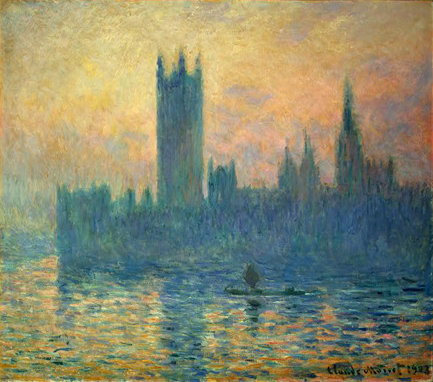
On Friday evening last I received His Majesty's commission to form a new Administration. It as the evident wish and will of Parliament and the nation that this should be conceived on the broadest possible basis and that it should include all parties, both those who supported the late Government and also the parties of the Opposition. I have completed the most important part of this task. A War Cabinet has been formed of five Members, representing, with the Opposition Liberals, the unity of the nation. The three party Leaders have agreed to serve, either in the War Cabinet or in high executive office. The three Fighting Services have been filled. It was necessary that this should be done in one single day, on account of the extreme urgency and rigour of events. A number of other positions, key positions, were filled yesterday, and I am submitting a further list to His Majesty to-night. I hope to complete the appointment of the principal Ministers during to-morrow. the appointment of the other Ministers usually takes a little longer, but I trust that, when Parliament meets again, this part of my task will be completed, and that the administration will be complete in all respects.
I considered it in the public interest to suggest that the House should be summoned to meet today. Mr. Speaker agreed, and took the necessary steps, in accordance with the powers conferred upon him by the Resolution of the House. At the end of the proceedings today, the Adjournment of the House will be proposed until Tuesday, 21st May, with, of course, provision for earlier meeting, if need be. The business to be considered during that week will be notified to Members at the earliest opportunity. I now invite the House, by the Motion which stands in my name, to record its approval of the steps taken and to declare its confidence in the new Government.
To form an Administration of this scale and complexity is a serious undertaking in itself, but it must be remembered that we are in the preliminary stage of one of the greatest battles in history, that we are in action at many other points in Norway and in Holland, that we have to be prepared in the Mediterranean, that the air battle is continuous and that many preparations, such as have been indicated by my hon. Friend below the Gangway, have to be made here at home. In this crisis I hope I may be pardoned if I do not address the House at any length today. I hope that any of my friends and colleagues, or former colleagues, who are affected by the political reconstruction, will make allowance, all allowance, for any lack of ceremony with which it has been necessary to act. I would say to the House, as I said to those who have joined this government: "I have nothing to offer but blood, toil, tears and sweat."
We have before us an ordeal of the most grievous kind. We have before us many, many long months of struggle and of suffering. You ask, what is our policy? I can say: It is to wage war, by sea, land and air, with all our might and with all the strength that God can give us; to wage war against a monstrous tyranny, never surpassed in the dark, lamentable catalogue of human crime. That is our policy. You ask, what is our aim? I can answer in one word: It is victory, victory at all costs, victory in spite of all terror, victory, however long and hard the road may be; for without victory, there is no survival. Let that be realised; no survival for the British Empire, no survival for all that the British Empire has stood for, no survival for the urge and impulse of the ages, that mankind will move forward towards its goal. But I take up my task with buoyancy and hope. I feel sure that our cause will not be suffered to fail among men. At this time I feel entitled to claim the aid of all, and I say, "come then, let us go forward together with our united strength."
I considered it in the public interest to suggest that the House should be summoned to meet today. Mr. Speaker agreed, and took the necessary steps, in accordance with the powers conferred upon him by the Resolution of the House. At the end of the proceedings today, the Adjournment of the House will be proposed until Tuesday, 21st May, with, of course, provision for earlier meeting, if need be. The business to be considered during that week will be notified to Members at the earliest opportunity. I now invite the House, by the Motion which stands in my name, to record its approval of the steps taken and to declare its confidence in the new Government.
To form an Administration of this scale and complexity is a serious undertaking in itself, but it must be remembered that we are in the preliminary stage of one of the greatest battles in history, that we are in action at many other points in Norway and in Holland, that we have to be prepared in the Mediterranean, that the air battle is continuous and that many preparations, such as have been indicated by my hon. Friend below the Gangway, have to be made here at home. In this crisis I hope I may be pardoned if I do not address the House at any length today. I hope that any of my friends and colleagues, or former colleagues, who are affected by the political reconstruction, will make allowance, all allowance, for any lack of ceremony with which it has been necessary to act. I would say to the House, as I said to those who have joined this government: "I have nothing to offer but blood, toil, tears and sweat."
We have before us an ordeal of the most grievous kind. We have before us many, many long months of struggle and of suffering. You ask, what is our policy? I can say: It is to wage war, by sea, land and air, with all our might and with all the strength that God can give us; to wage war against a monstrous tyranny, never surpassed in the dark, lamentable catalogue of human crime. That is our policy. You ask, what is our aim? I can answer in one word: It is victory, victory at all costs, victory in spite of all terror, victory, however long and hard the road may be; for without victory, there is no survival. Let that be realised; no survival for the British Empire, no survival for all that the British Empire has stood for, no survival for the urge and impulse of the ages, that mankind will move forward towards its goal. But I take up my task with buoyancy and hope. I feel sure that our cause will not be suffered to fail among men. At this time I feel entitled to claim the aid of all, and I say, "come then, let us go forward together with our united strength."
(speech quotation from http://www.winstonchurchill.org)
Frustation in Norway

Here we have Churchill reading the conclusion of the Chapter XXXVI - Frustation in Norway.
"Twilight War ended with Hitler's assault in Norway. It broke into the glare of the most fearful military explosion so far know to man. I have described the trance in which for eight months France and Britain had been held while all the world wondered. This phase proved most harmful to the Allies. From the moment when Stalin made terms with Hitler the Communists in France took their cue from Moscow and denounced the war as "an imperialist and capitalist crime against democracy". They did what they could to undermine morale in the Army and impede production in the workshops. The morale of France, both of her soldiers and her people, was now in May markedly lower than at the outbreak of war.
Nothing like this happened in Britain, where Soviet-directed Communism, though busy, was weak. Nevertheless we were still a party Government, under a Prime Minister from whom the Opposition was bitterly estranged, and without the ardent and positive help of the trade union movement. The sedate, sincere, but routine character of the Administration did not evoke that intense effort, either in the governing circles or in the munitions factories, which was vital. The stroke of catastrophe and the spur of peril were needed to call forth the dormant might of the British nation. The tocsin was about to sound."
Churchill, Winston S. The Second Wolrd War: The Gathering Storm, 1948. Pages 583-584.
domingo, 7 de fevereiro de 2010
Narvik

"For many generations Norway, with its homely, rugged population engaged in trade, shipping, fishing, and agriculture, had stood outside the turmoil of world politics. Far off were the days when the Vikings had sallied forth to conquer or ravage a large part of the then know world. The Hundred Years War, the Thirty Years War, the wars of William III and Marlborough, the Napoleonic convulsion, and later conflicts, had left Norway, though separated from Denmark otherwise unmoved and unscathed. A large proportion of the people had hitherto thought of neutrality and neutrality alone. A tiny army and a population with no desires except to live peaceably in their own mountainous and semi-Arctic country now fell victims to the new German agression.
It had been the policy of Germany for many years to profess cordial sympathy and friendship with Norway. After the previous war some thousands of German children had found food and shelter with the Norwegians. These had now grown up in Germany, and many of them were ardent Nazis. There was also the Major Quisling, who with a handful of young men had aped and reproduced in Norway on an insignificant scale the Fascist movement. For some years past Nordic meeting had been arranged in Germany to which large numbers of Norwegians had been invited. German lecturers, actors, singers, and men of science had visited Norway in the promotion of a common culture. [All this had been woven into the texture of the Hitlerite military plan, and a widely-scattered internal pro-German conspiracy set on foot. In this every member of the German diplomatic or consular service, every German purchasing agency, played its part under directions from the German Legation in Oslo.] The deed of infamy and treachery now performed may take its place with the Sicilian Vespers and the massacre of St. Bartholomew. [The president of the Norwegian Parliament, Carl Hambro, has written:
In the case of Poland and later in those of Holland and Belgium notes had been exchanged, ultimata had been presented. In the case of Norway the Germans under the mask of friendship tried to extinguish the nation in one dark night, silently, murderously, without any declaration of war, without any warning given. What stupefied the Norwegians mote than the act of aggression itself was the national realization that a Great Power, for years professing its friendship, suddenly appeared a deadly enemy, and that men and woman with whom one had had intimate business or professional relations, who had been cordially welcomed in one's home, were spies and agents of destruction. More than by the violation of treaties and every international obligation, the people of Norway were dazed to find that for years their Germans friends had been elaborating the most detailed plans for the invasion and subsequent enslaving of their country.]
The King, the Government, the Army, and the people, as soon as they realized what was happening, flamed into furious anger. But it was too late. German infiltration and propaganda had hitherto clouded their vision, and now sapped their powers of resistance. Major Quisling presented himself at the radio, now in German hands, as the pro-German ruler of the conquered land. Almost all Norwegian officials refused to serve him. The Army was mobilised, and at once began, under General Ruge, to fight the invaders pressing northwards from Oslo. Patriots who could find arms took the mountains and the forests. The King, the Ministry, and the Parliament withdrew first to Hamar, a hundred miles from Oslo. [They were hotly pursued by German armoured cars, and ferocious attempts were made to exterminate them by bombing and machine-gunning from the air. They continued however to issue proclamations to the whole country urging the most strenuous resistance. The rest of the population was overpowered and terrorised by blood examples into stupefied or sullen submission. The peninsula of Norway is nearly a thousand miles long.] It is sparsely inhabited, and roads and railroads are few, especially to the northward. The rapidity with which Hitler effected the domination of the country was a remarkable feat of war and policy, and an enduring example of German thoroughness, wickedness, and brutallity.
The Norwegian Government, hitherto in their fear of Germany so frigid to us, now made vehement appeals for succour. It was from the beginning obviously impossible for us to rescue Southern Norway. Almost all our trained troops, and many only half trained, were in France. Our modest but growing Air Force was fully assigned to supporting the British Expeditionary Force, to Home Defence, and vigorous training. All our anti-aircraft guns were demanded ten times over for vulnerable points of the highest importance. Still, we felt bound to do our utmost to go to their aid, even at violent derangement of our own preparations and interests. Narvik, it seemed, could certainly be seized and defended with benefit to the whole Allied cause. Here the King of Norway might fly his flag unconquered. Trondheim might be fought for, at any rate as means of delaying the northward advance of the invader until Narvik could be regained and made the base of an Army. This, is seemed, could be maintained from the sea at a strength superior to anything which could be brought against it by land through to five hundred miles of mountain country. The Cabinet heartily approved all possible measures for the rescue and defence of Narwik and Trondheim. The troops which had been released from the Finnish project, and a nucleus kept in hand for Narwik, could soon be ready. They lacked aircraft, anti-aircraft guns, anti-tank guns, tanks, transport, and training. The whole of Northern Norway was covered with snow to depths which none of our soldiers had even seen, felt, or imagined. There were neither snow-shoes nor skis - still less skiers. We must do our best. Thus began this ramshackle campaign.
The Norwegian Government, hitherto in their fear of Germany so frigid to us, now made vehement appeals for succour. It was from the beginning obviously impossible for us to rescue Southern Norway. Almost all our trained troops, and many only half trained, were in France. Our modest but growing Air Force was fully assigned to supporting the British Expeditionary Force, to Home Defence, and vigorous training. All our anti-aircraft guns were demanded ten times over for vulnerable points of the highest importance. Still, we felt bound to do our utmost to go to their aid, even at violent derangement of our own preparations and interests. Narvik, it seemed, could certainly be seized and defended with benefit to the whole Allied cause. Here the King of Norway might fly his flag unconquered. Trondheim might be fought for, at any rate as means of delaying the northward advance of the invader until Narvik could be regained and made the base of an Army. This, is seemed, could be maintained from the sea at a strength superior to anything which could be brought against it by land through to five hundred miles of mountain country. The Cabinet heartily approved all possible measures for the rescue and defence of Narwik and Trondheim. The troops which had been released from the Finnish project, and a nucleus kept in hand for Narwik, could soon be ready. They lacked aircraft, anti-aircraft guns, anti-tank guns, tanks, transport, and training. The whole of Northern Norway was covered with snow to depths which none of our soldiers had even seen, felt, or imagined. There were neither snow-shoes nor skis - still less skiers. We must do our best. Thus began this ramshackle campaign.
Churchill, Winston S. The Second Wolrd War: The Gathering Storm, 1948. Pages 545-547.
Rio de Janeiro
(...) About the same time reports reached the Norwegian capital that a German troopship, the Rio de Janeiro, had been sunk off the south coast by the Polish submarine Orzel (...)
Churchill, Winston S. The Second Wolrd War: The Gathering Storm. 1948. Page 531.
Can someone tell me why a German troopship was called Rio de Janeiro?
quarta-feira, 3 de fevereiro de 2010
Before the Storm
Here we have Churchill reading the introduction of the Chapter XXXII - Before the Storm (March 1940) (The Gathering Storm, Book II - The Twilight War).
...
segunda-feira, 1 de fevereiro de 2010
The tank gap

Churchill, Winston S. The Second Wolrd War: The Gathering Storm. 1948. Page 503.
Molotov Cocktail

The brunt of the Russian attach fell at first upon the frontier defences of the Finns in the Karelian Isthmus. These comprised a fortified zone about twenty miles in depht running north and south through forest country, deep in snow. This was called the "Mannerheim Line", after the Finnish Commander-in-Chief and savior of Finland from Bolshevik subjugation in 1917. The indignation excited in Britain, France, and even more vehemently in the United States, at the unprovoked attack by the enormous Soviet Power upon a small, spirited and highly-civilised nation was soon followed by astonishment and relief. The early weeks of fighting brought no success to the Soviet forces, which in the first instance were drawn almost entirely from the Leningrad garrison. The Finnish Army, whose total fighting strength was about only 200,000 men, gave a good account of themselves. The Russian tanks were encountered with audacity and a new type of hand-grenade, soon nicknamed "the Molotov Cocktail".
Churchill, Winston S. The Second Wolrd War: The Gathering Storm. 1948. Page 485.
The sinking of Graf Spee

quinta-feira, 28 de janeiro de 2010
Statistics at war

One of the first steps I took on taking charge of the Admiralty and becoming a member of the War Cabinet was to form a statistical department of my own. For thispurpose I relied on Professor Lindemann, my friend and confidant of so many years. Together we had formed our views and estimates about the hole story. I now installed him at the Admiralty with half a dozen statisticians and economists whom we could trust to pay no attention to anything but realities. This group of capable men, with access to all official information, was able , under Lindemann's guidance, to present me continually with tables and diagrams, illustrating the whole war so far as it came within our knowledge. They examined and analysed with relentless pertinacity all the departamental papers which were circulated to the War Cabinet, and also pursued all the inquiries which I wished to make myself.
At this time there was no general Government statistical organization. Each department presented its tale on its own figures and data. The Air Ministry counted one way, the War Office another. The Ministry of Supply and the Board of Trade, through meaning the same thing, talked different dialects. This led sometimes to misunderstandings and waste of time when some point or other came to crunch in the Cabinet (...).
Churchill, Winston S. The Second Wolrd War: The Gathering Storm. 1948. Página 420.
More about Lindemann here.
Assinar:
Postagens (Atom)